Metaverse Investing: 3 High-Growth Opportunities Before 2027
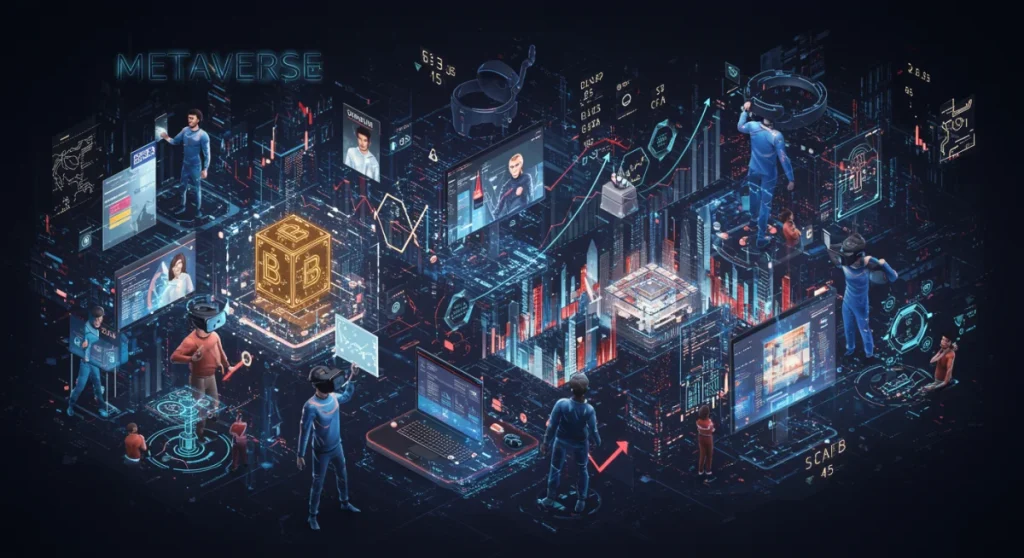
The metaverse is rapidly evolving into a significant investment frontier, presenting high-growth opportunities in virtual real estate, immersive gaming, and foundational infrastructure that astute investors can capitalize on before January 2027.
The concept of the metaverse has rapidly transitioned from science fiction to a tangible, albeit nascent, digital frontier. For forward-thinking investors, this emerging digital universe represents an unprecedented opportunity. Understanding and identifying key areas for metaverse investment opportunities before January 2027 could yield substantial financial impact, positioning early adopters at the forefront of the next technological revolution.
Understanding the Metaverse Investment Landscape
Before diving into specific opportunities, it’s crucial to grasp the fundamental nature of the metaverse. It’s not a single product or platform but an interconnected network of virtual worlds, augmented reality experiences, and digital ecosystems. This complexity creates diverse entry points for investment, ranging from direct participation in virtual economies to backing the underlying technologies that enable them.
The metaverse is characterized by persistence, real-time rendering, interoperability, and digital ownership. These features are powered by advancements in blockchain, artificial intelligence, virtual reality (VR), and augmented reality (AR). As these technologies mature, the metaverse’s potential for economic activity, social interaction, and entertainment expands exponentially.
The Pillars of Metaverse Growth
Several foundational elements underpin the metaverse’s expansion, making them ripe for investment. These include:
- Infrastructure: The hardware, software, and networking capabilities required to build and sustain metaverse experiences.
- Platforms: The virtual worlds and environments where users interact, create, and transact.
- Content and Experiences: The games, applications, and digital assets that populate these platforms.
- Payment Systems: The digital currencies and blockchain technologies facilitating economic exchange.
As the metaverse continues to evolve, understanding these interconnected components will be vital for identifying the most promising investment avenues. The convergence of these pillars creates a dynamic environment where innovation drives value.
Opportunity 1: Virtual Real Estate and Digital Land
One of the most talked-about and potentially lucrative metaverse investment opportunities lies in virtual real estate. Just like in the physical world, digital land in popular metaverse platforms like Decentraland, The Sandbox, and Somnium Space has seen significant price appreciation. These virtual plots can be bought, sold, developed, and monetized.
The value of virtual land is often driven by factors such as location (proximity to popular hubs or celebrity-owned parcels), scarcity, and utility (potential for hosting events, advertising, or creating immersive experiences). Early investors have already seen substantial returns, and while the market has matured, strategic acquisition before 2027 could still yield considerable gains.
Why Virtual Land is Gaining Value
The increasing demand for digital presence and the growing user base within metaverse platforms are primary drivers. Businesses are recognizing the potential for virtual storefronts, advertising spaces, and experiential marketing. Individuals are investing for social status, creative expression, or simply as a speculative asset.
- Scarcity: Most metaverse platforms have a fixed supply of land parcels, creating inherent scarcity.
- Utility: Land can be developed into galleries, event venues, games, or rented out for passive income.
- Community: Owning land in popular areas allows for greater exposure and interaction within the metaverse community.
- Brand Presence: Major brands are establishing their presence, driving up perceived value and desirability.
Investing in virtual land requires careful research into specific platforms, their economic models, and their long-term growth prospects. Understanding the community, development tools, and interoperability features of a platform is key to making informed decisions.

Opportunity 2: Immersive Gaming and Entertainment Platforms
The gaming industry is a natural precursor to the metaverse, with many existing games already offering virtual worlds and economies. Investing in companies developing or operating immersive gaming and entertainment platforms within the metaverse represents another significant high-growth opportunity. These platforms are not just about playing games; they are about creating persistent digital identities, social spaces, and new forms of entertainment.
Companies like Roblox, Epic Games (Fortnite), and emerging Web3 gaming studios are at the forefront of this trend. Their success hinges on attracting a large, engaged user base and fostering vibrant in-game economies where players can earn, spend, and own digital assets. The integration of NFTs (Non-Fungible Tokens) for in-game items, avatars, and experiences further solidifies the economic potential of these platforms.
The Evolution of Play-to-Earn Models
The shift towards play-to-earn (P2E) models, where players can earn cryptocurrency or NFTs through gameplay, is a transformative aspect of metaverse gaming. This model incentivizes participation and creates real-world economic value for digital assets. Before 2027, we anticipate significant advancements and wider adoption of these models.
- Digital Ownership: NFTs allow players true ownership of their in-game assets, which can be traded or sold.
- Monetization Opportunities: Players can earn income through gameplay, content creation, or asset trading.
- Community Engagement: Strong communities form around these platforms, driving further engagement and innovation.
- Cross-Platform Utility: The potential for assets to be used across different metaverse experiences adds value.
Evaluating investment in this sector involves assessing a platform’s technological infrastructure, its community size and engagement, the strength of its P2E mechanics, and its ability to attract and retain developers and content creators. The longevity and interoperability of the digital assets are also critical considerations.
Opportunity 3: Metaverse Infrastructure and Enabling Technologies
Beyond the visible virtual worlds, a vast ecosystem of infrastructure and enabling technologies powers the metaverse. Investing in companies that build these foundational layers offers a more diversified and potentially less volatile entry point into the metaverse market. This includes hardware manufacturers, software developers, and blockchain companies crucial for scalability, security, and user experience.
Key areas within infrastructure include advanced VR/AR headsets, haptic feedback devices, high-performance computing (HPC) solutions, decentralized storage, and blockchain protocols. These technologies are essential for creating seamless, immersive, and secure metaverse experiences. As the metaverse grows, so too will the demand for these underlying components.
Defining the Technological Backbones
The success of the metaverse fundamentally relies on robust technological backbones. Companies innovating in these areas are likely to see sustained growth.
- VR/AR Hardware: Devices like Meta Quest, Apple Vision Pro, and other emerging headsets are entry points to the metaverse.
- Blockchain and Web3: Protocols enabling decentralized ownership, digital identity, and secure transactions.
- AI and Machine Learning: For creating realistic avatars, dynamic environments, and intelligent NPCs (non-player characters).
- Cloud Computing and Edge Computing: Essential for processing the vast amounts of data generated within the metaverse.
Investors should look for companies with strong research and development capabilities, significant intellectual property, and strategic partnerships within the tech ecosystem. The ability to scale and adapt to evolving technological demands will be paramount for long-term success in this space.
Navigating Risks and Due Diligence
While the metaverse presents exciting opportunities, it’s crucial to acknowledge the inherent risks. This is an emerging market, subject to high volatility, regulatory uncertainties, and technological shifts. Comprehensive due diligence is non-negotiable for any potential investor.
Market sentiment, technological obsolescence, and the potential for scams or poorly executed projects are all factors to consider. Diversification, investing only what you can afford to lose, and staying informed about market trends are essential strategies for mitigating risk in this dynamic environment. The regulatory landscape around digital assets and virtual economies is also still evolving, which could impact future valuations.
Key Considerations for Investors
Before committing capital, potential investors should meticulously evaluate several aspects:
- Project Viability: Assess the team, roadmap, and unique value proposition of any metaverse project.
- Community Strength: A vibrant and engaged community often indicates a robust and sustainable ecosystem.
- Technological Foundation: Understand the underlying tech stack and its scalability.
- Regulatory Environment: Stay updated on potential government regulations that could affect digital assets.
- Market Cap and Liquidity: Consider the size of the investment and the ease of buying and selling assets.
Approaching metaverse investments with a well-researched strategy and a realistic understanding of the risks involved is vital for success. The landscape is rapidly changing, and continuous learning will be an investor’s best asset.
Projected Growth and Market Trajectory
Analysts project significant growth for the metaverse market in the coming years. Various reports suggest that the metaverse could become a multi-trillion-dollar industry by the end of the decade. This growth will be fueled by increasing adoption of VR/AR devices, advancements in blockchain technology, and the continuous integration of digital and physical realities.
Before January 2027, we expect to see clearer trends solidify, with certain platforms and technologies emerging as leaders. The convergence of social media, gaming, e-commerce, and work environments within the metaverse will drive its expansion, creating new economic paradigms and investment horizons. Early strategic positioning is therefore key to capturing this value.
Factors Driving Future Expansion
Several macro and micro trends are converging to accelerate metaverse development:
- Technological Advancements: Improved VR/AR hardware, faster internet speeds, and more powerful computing.
- Increased Corporate Investment: Major tech companies are pouring billions into metaverse development.
- Consumer Adoption: A younger generation is growing up with digital identities and virtual interactions.
- Decentralization: Blockchain-based metaverses offer user ownership and control, appealing to a broad audience.
The trajectory of the metaverse is upward, but not without its challenges. Investors who can discern genuine innovation from hype and focus on projects with strong fundamentals and clear utility will be best positioned to benefit from this transformative technological wave.
The Role of NFTs and Blockchain in Metaverse Investments
Non-Fungible Tokens (NFTs) and blockchain technology are indispensable to the metaverse, providing the backbone for digital ownership, scarcity, and interoperability. NFTs allow users to truly own digital assets, from virtual land and avatars to art and in-game items. This verifiable ownership is a fundamental shift from traditional digital content, where users typically only license access.
Blockchain technology, underpinning NFTs and cryptocurrencies, ensures transparency, security, and decentralization within metaverse economies. It enables secure transactions, verifiable digital identities, and the creation of self-governing virtual communities. Understanding the role of these technologies is critical for assessing the long-term viability and investment potential of metaverse projects.
Blockchain’s Impact on Digital Economies
Blockchain’s immutable ledger and smart contract capabilities are revolutionizing how value is created, exchanged, and stored in the metaverse.
- True Ownership: NFTs provide irrefutable proof of ownership for digital assets.
- Interoperability: Blockchain aims to enable assets to move seamlessly between different metaverse platforms.
- Decentralized Governance: DAOs (Decentralized Autonomous Organizations) allow communities to govern metaverse projects.
- Secure Transactions: Cryptocurrencies facilitate secure and transparent economic exchanges.
Investing in platforms and projects that leverage robust blockchain solutions and embrace true digital ownership is a strategic move. The transparency and security offered by these technologies are key to building trust and fostering sustainable growth within the metaverse ecosystem.
| Key Opportunity | Brief Description |
|---|---|
| Virtual Real Estate | Acquisition and development of digital land plots in popular metaverse platforms for potential appreciation and monetization. |
| Immersive Gaming | Investing in companies developing play-to-earn games and entertainment platforms with strong user bases and digital economies. |
| Metaverse Infrastructure | Supporting companies building essential hardware (VR/AR), software, and blockchain protocols that power the metaverse. |
| NFTs and Digital Assets | Direct investment in unique digital collectibles and assets that derive value from scarcity, utility, and cultural significance within the metaverse. |
Frequently Asked Questions About Metaverse Investing
The metaverse is a persistent, interconnected network of virtual worlds, augmented reality, and digital economies. It’s an investment opportunity due to its potential to revolutionize social interaction, commerce, and entertainment, creating new avenues for value creation and wealth generation as technology advances rapidly.
Key risks include high market volatility, regulatory uncertainty, technological obsolescence, and the speculative nature of many projects. It’s an emerging market, meaning investments can be highly speculative and subject to rapid shifts in sentiment and underlying technology. Diligent research is essential.
You can invest in virtual real estate by purchasing digital land parcels on platforms like Decentraland or The Sandbox using cryptocurrency. This usually involves setting up a digital wallet and connecting it to the platform’s marketplace. Research specific platforms and their community before investing.
NFTs (Non-Fungible Tokens) are crucial for establishing verifiable digital ownership of assets within the metaverse, such as virtual land, avatars, and in-game items. They enable scarcity, authenticity, and transferability, forming the backbone of the metaverse’s digital economy and allowing for unique investment opportunities.
Yes, you can invest in the metaverse by purchasing stocks of companies heavily invested in its development, such as hardware manufacturers (VR/AR), gaming companies, or blockchain infrastructure providers. ETFs (Exchange Traded Funds) focused on the metaverse or related technologies also offer diversified exposure.
Conclusion
The metaverse is rapidly emerging as a transformative technological frontier, offering significant metaverse investment opportunities for those willing to explore its evolving landscape. From virtual real estate and immersive gaming platforms to the foundational infrastructure that powers these digital worlds, the potential for high growth before January 2027 is substantial. While risks are inherent in any nascent market, strategic research and a diversified approach can position investors to capitalize on this next wave of digital innovation. The convergence of advanced technologies like blockchain, AI, VR, and AR is creating an unprecedented environment for value creation, making the metaverse a compelling focus for future-oriented financial strategies.