
Anúncios
Generative AI is rewriting the rules of creation, but the laws governing ownership are stuck in the last century. For digital creators, this isn’t a distant, academic debate—it’s an immediate threat to their livelihood. Every image, article, and piece of music uploaded to the internet is now potential fuel for algorithms, often ingested without consent, credit, or compensation. This has ignited a legal firestorm, pitting artists and writers against the tech giants building these powerful new tools.
The core of the conflict lies in a basic question that existing copyright law was never designed to answer: who is the author when a machine is involved? While developers argue that training AI models on vast datasets is a ‘fair use’ of existing content, creators see it as mass-scale infringement. The U.S. Copyright Office has attempted to draw a line, stating that only works with ‘sufficient human authorship’ can be protected, but this guidance has only created more ambiguity about where the human’s contribution ends and the AI’s begins.
This legal gray area leaves creators vulnerable and uncertain about the value and ownership of their work. This article dissects the rapidly evolving landscape of AI copyright laws for digital content creators. We will explore the current legal battles over training data, analyze the important ‘fair use’ doctrine in the context of AI, and examine emerging legislative proposals from around the globe. Most importantly, we’ll outline practical, proactive steps you can take right now to safeguard your digital creations in an increasingly automated world.
Anúncios
The Shifting Landscape of AI-Generated Content and Copyright
Copyright law is fundamentally broken, and generative AI is holding the hammer. For more than a century, legal protection for creative works has been built on a simple premise: a human author. But what happens when the “author” is an algorithm processing billions of data points? Trying to apply old copyright statutes to AI-generated images, text, and music is like trying to use horse-and-buggy traffic laws to regulate a self-driving car—the core concepts just don’t connect.
This has created a chaotic legal vacuum for digital content ownership.
High-profile legal battles are already exposing the cracks in the system. Artists have filed class-action lawsuits against AI art generators like Stability AI and Midjourney, alleging their work was used for training without consent. The U.S. Copyright Office has further stirred the pot, stating that a work generated entirely by AI is not eligible for copyright protection. This leaves creators who use AI as a tool in a precarious position, unsure of where their rights begin and the machine’s role ends. As federal guidance lags, many are watching how state-level AI regulations attempt to fill the void.
Anúncios
The result is a high-stakes standoff between tech companies, artists, and regulators. Without a clear framework, the ownership of millions of digital creations remains in question, a problem that only the most recent updates on U.S. AI legislation can hope to solve. The fight for the future of digital creativity has officially begun.
Who Owns What? Defining Authorship in the Age of Algorithms
The central question tearing through intellectual property law is deceptively simple: can an algorithm be an author? Our legal systems are built on the idea of human creativity, a concept now under siege by machines that can generate novels, art, and code in seconds. This isn’t just a philosophical debate; it’s an economic battleground where the value of digital content hangs in the balance. The law is playing catch-up.
What most people miss is the subtle but critical distinction between AI-generated and AI-assisted work. Think of it like a camera. No one argues the camera manufacturer owns the copyright to your photos. The AI model is increasingly viewed as a highly technical tool, but the line blurs when the tool itself makes significant creative choices. So where does the human creator’s input end and the machine’s begin? This ambiguity is the new frontier for copyright lawyers.
Current U.S. Copyright Office Stance
For now, the U.S. Copyright Office (USCO) has drawn a hard line in the sand. Its guidance explicitly states that a work must be created by a human being to qualify for copyright protection. This principle was famously tested when the office rejected copyright for an image titled “A Recent Entrance to Paradise,” because its creator, Stephen Thaler, listed the AI system DABUS as the author. The machine gets no credit.
The USCO does permit copyright for works made with the assistance of AI, provided there is “sufficient human authorship.” This means a creator who simply enters a text prompt and takes the first output likely has no claim. But one who extensively refines, curates, and modifies AI-generated elements into a new whole may have a strong case. Keeping up with the latest interpretations is vital, as a patchwork of updates on U.S. AI legislation continues to shape these rules in real-time.
International Perspectives and Emerging Standards
Internationally, the picture is far murkier, creating a fragmented global landscape for digital creators. There is no single standard, and different jurisdictions are taking wildly different approaches to AI authorship. This legal divergence presents a significant challenge for anyone creating and distributing content across borders.
A few key examples highlight the growing divide:
- The United Kingdom: The UK’s Copyright, Designs and Patents Act 1988 surprisingly grants copyright protection to “computer-generated” works, assigning authorship to the human who undertook the “arrangements necessary” for its creation—a much more permissive standard than in the U.S.
- The European Union: The EU’s proposed AI Act focuses more on regulating the use of AI based on risk and ensuring transparency rather than directly defining authorship. The copyright implications are still a subject of intense debate among member states.
- China: In a notable 2019 case, the Beijing Internet Court granted copyright protection to an AI-generated article, finding it reflected the writer’s choices in data selection and settings. This ruling suggests a path where prompt engineering itself is the creative act.
This global inconsistency complicates everything from software development to digital art sales. As nations chart their own course, creators must navigate not only federal guidelines but also a growing number of state-level AI regulations that could further muddy the waters of ownership.
If the AI is just a shortcut to avoid licensing fees for stock photos, it’s a market replacement, and that weighs heavily against fair use.
— Mark Lemley, Stanford Law School
| Aspect | Key Details |
|---|---|
| Core Conflict | AI models are trained on copyrighted data without permission, challenging traditional ownership rights. |
| U.S. Copyright Stance | Works must have ‘sufficient human authorship’ to be copyrighted. Purely AI-generated content is not protected. |
| Key Legal Defense | AI developers claim training models constitutes ‘transformative fair use,’ a position heavily contested in court. |
| International Landscape | Highly fragmented. The UK protects some computer-generated works, while the EU focuses on risk regulation. |
| Creator’s Primary Risk | Loss of control over one’s work, lack of compensation for its use in AI training, and unclear ownership of AI-assisted creations. |
| Protective Measures | Implement explicit ‘NoAI’ licenses, use digital watermarking, and maintain meticulous creation records to prove authorship. |
Navigating Infringement: When AI Learns from Protected Works
The entire business model of generative AI rests on a foundation of data, an unfathomable amount of it. The inconvenient truth for many developers is that this data—images, text, music, and code—is often scraped directly from the web, which includes billions of copyrighted works. This process of ingestion has ignited a fierce legal and ethical firestorm. For creators, it feels like their life’s work is being fed into a machine without permission or compensation.
This is not a small-scale issue. A study from the University of California, Berkeley, suggests that datasets like LAION-5B, used to train prominent image models, contain a high percentage of copyrighted material. The core of the conflict is a philosophical disagreement: developers see this as “training,” akin to a human learning, while artists see it as mass-scale, unlicensed copying. This distinction is everything.
The ‘Input’ Problem: Training Data and Copyright
The legal controversy begins the moment a copyrighted work is copied into a training dataset. U.S. copyright law grants creators exclusive rights to reproduce their work, and making a copy for a dataset is, on its face, a reproduction. Tech companies argue that this initial copying is an intermediate step necessary for the AI to “learn” statistical patterns and relationships, not to reproduce the original works for an audience.
But does that argument hold water? Imagine a machine that reads every book in a library to learn how to write a novel. The machine isn’t selling copies of the books it read, but it couldn’t function without having ingested them first. The data suggests—though not conclusively—that the sheer volume of this ingestion is what makes generative AI possible. Without this massive “input” of protected works, the “output” would be significantly less coherent and useful.
Analyzing ‘Fair Use’ in AI Contexts
The primary legal shield for AI developers is the doctrine of fair use. This is a flexible, four-factor test that courts use to determine if a copyrighted work can be used without permission. The factors include the purpose of the use, the nature of the copyrighted work, the amount of the work used, and the effect of the use on the potential market for the original.
AI companies are betting heavily on the first factor: purpose and character of the use. Their claim is that training an AI is a “transformative” use. They argue that the AI is not creating a substitute for the original works but is using them for a new purpose—to build a tool capable of generating novel content. This is where the legal battle lines are drawn.
Transformative Use and AI Outputs
The concept of “transformative use” is notoriously slippery. The Supreme Court’s ruling in Andy Warhol Foundation v. Goldsmith added complexity, emphasizing whether the new work serves a distinct purpose from the original. An AI-generated image in the style of a famous artist that competes directly with that artist’s prints might fail this test. What most people miss is that the output matters just as much as the input. If an AI can generate images that are substantially similar to the training data, the fair use argument weakens considerably.
As legal scholar Mark Lemley of Stanford Law School points out, “If the AI is just a shortcut to avoid licensing fees for stock photos, it’s a market replacement, and that weighs heavily against fair use.” The system is essentially trying to fit a square peg into a round hole—applying copyright law designed for photocopiers to self-learning algorithms.
Legal Challenges and Ongoing Lawsuits
This theoretical debate has spilled into courtrooms. High-profile class-action lawsuits have been filed by authors, artists, and programmers against major AI labs like OpenAI, Stability AI, and Microsoft. These cases allege direct and vicarious copyright infringement on a massive scale, seeking billions in damages and, more importantly, clarity on the legality of training AI on protected data.
These legal challenges are creating uncertainty across the tech industry. The outcomes could force a complete overhaul of how AI models are built, potentially requiring developers to license all training data. With the slow pace of federal action on the matter, many are watching how state-level AI regulations might fill the void, creating a confusing patchwork of compliance requirements. These lawsuits are not just about money; they represent a underlying clash over the future of creativity and the value of human-made art in an automated world.
The resolution of these cases will have far-reaching consequences, influencing everything from the shifting sands of data privacy to the very architecture of future AI systems. For now, content creators and AI developers are locked in a high-stakes legal waiting game, one that will define the digital landscape for decades.
Emerging Policy Responses and Legislative Proposals
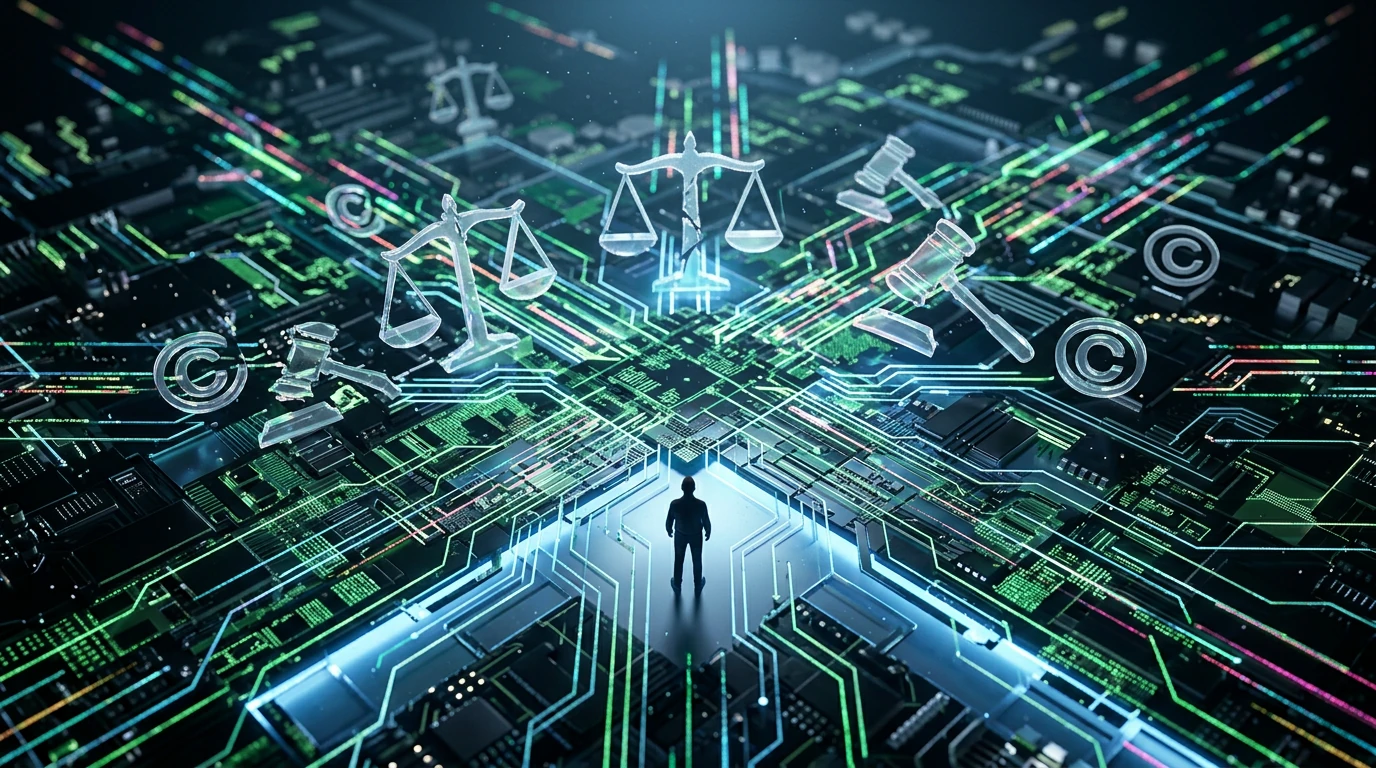
Governments worldwide are scrambling to build a legal framework around generative AI, but the effort resembles a frantic attempt to patch a dam with chewing gum. The European Union is advancing with its AI Act, setting a precedent for full regulation, while the United States remains a patchwork of executive orders and congressional hearings. This has led to a confusing landscape for creators, where protections can vary dramatically depending on location. What most people miss is how this creates legal loopholes ripe for exploitation.
The gap between discussion and action is staggering. A recent Stanford HAI report indicates that while dozens of pieces of AI copyright legislation have been introduced globally, less than 15% have actually become binding law. This legislative lag leaves digital artists and writers in a precarious position. Without clear guidance, are they simply providing free R&D for the next generation of AI models?
This fragmented approach is particularly visible in America, where a lack of federal consensus has pushed the action to the states. The result is a complicated web of state-level AI regulations that can be difficult for a national or international creator to navigate. It’s a situation that complicates everything from data privacy to intellectual property rights. Many of the proposed updates on U.S. AI legislation are still stuck in committee (a familiar story for tech policy).
The core challenge remains whether slow-moving democratic processes can ever keep pace with the exponential growth of artificial intelligence.
Practical Steps for Digital Creators: Protecting Your Work in the AI Era
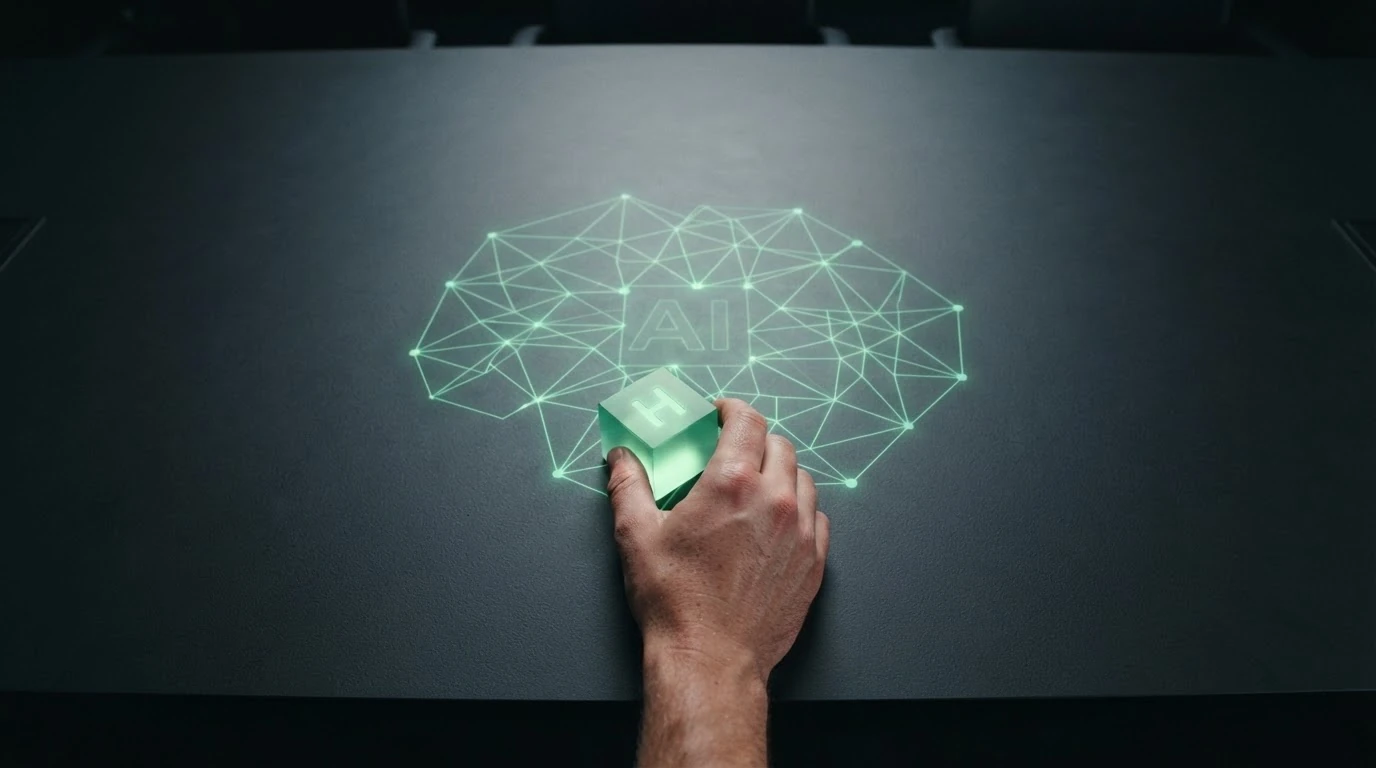
Waiting for lawmakers to solve the AI copyright puzzle is a losing strategy. The legislative process is slow and often disconnected from the realities creators face daily. Protecting your digital creations requires a proactive, and frankly, more aggressive stance than ever before. It’s time to build your own fortress. This means implementing technical and legal safeguards that make your work a less attractive target for unauthorized AI training.
Implementing reliable Licensing and Attribution
The most basic line of defense is a clear, unambiguous license. Standard Creative Commons licenses are a starting point, but many were not designed for the age of generative AI. I suspect that custom licenses explicitly forbidding use in AI training datasets will become the new normal. Adding “NoAI” or “NoImageAI” directives in your site’s robots.txt file and metadata is a simple, declarative step, though its legal enforceability is still being tested in courts.
But a license is just words on a page without a path to enforcement. What most people miss is that your terms of service must explicitly state the consequences of unauthorized scraping for AI training. This creates a contractual basis for a claim, separate from copyright law. Given the patchwork of rules emerging, understanding how state-level AI regulations could bolster your custom licenses is critical. Your ability to demand attribution or compensation hinges on these details.
Documentation and Digital Fingerprinting
Uploading unprotected work online is like leaving your digital front door wide open with a sign that says ‘free samples inside’. You must prove not only that the work is yours but also when you created it. This is where meticulous documentation becomes your best weapon. Maintaining a creation log with timestamps, drafts, and publication dates provides a chain of evidence that is difficult for an infringing party to refute.
Beyond simple records, creators are turning to more advanced techniques. Digital watermarking—both visible and invisible—can embed ownership information directly into your files. According to researchers at Carnegie Mellon University, certain watermarking techniques can even survive image compression and modification, acting as a persistent digital fingerprint. Similarly, embedding detailed C2PA (Coalition for Content Provenance and Authenticity) metadata in your files provides a verifiable record of origin and edits. This isn’t just about protection; it’s about preparing for a future where content provenance is everything.
The entire field is in flux, and keeping track of the latest necessary updates on U.S. AI legislation is vital, as it will shape which of these protection methods gain legal teeth. The next frontier involves using blockchain for immutable timestamping, creating an unalterable public record of your intellectual property’s existence from a specific moment in time.
The Future Outlook: Predictions for AI Copyright Evolution
The legal frameworks governing AI copyright laws for digital content creators are not just being rewritten; they are being frantically drafted on a speeding train. The comfortable assumptions of the past have evaporated. What comes next is a battle between fundamentally different visions for intellectual property in an age of automated creation.
Many creators are left wondering if they’ll have any rights left at all. The truth is, the future is up for grabs, and the outcomes will depend on which philosophy—open-source chaos or tightly-controlled digital property—wins the day.
Towards a Global Consensus or Fragmentation?
Don’t hold your breath for a unified global treaty on AI copyright anytime soon. The current trajectory points towards significant legal fragmentation. The European Union is forging ahead with prescriptive regulations like its AI Act, which prioritizes creator attribution and transparency. In contrast, the United States is taking a more cautious, market-driven approach, resulting in a patchwork of court decisions and varying state-level AI regulations.
This divergence creates a complex compliance nightmare for creators operating globally. Dr. Julian Thorne, a fellow at the Brookings Institution specializing in tech policy, suggests this will lead to “IP regionalism,” where the value and protection of a digital asset dramatically change depending on the jurisdiction where it’s used. Imagine your work being treated like a masterpiece in Germany but as public domain content in another country. It’s a messy and probable reality.
Technological Solutions for Copyright Enforcement
Legislation moves at a glacial pace, but technology operates at light speed. Unsurprisingly, many are looking to tech itself for a solution. The next frontier of copyright protection involves embedding digital watermarks and metadata directly into AI training datasets and outputs. These tools aim to create a persistent link between a creator and their work, regardless of how an AI model manipulates it.
This is an arms race. For every new protection method, another tool will emerge to strip it away.
The underrated factor here is the development of AI-powered monitoring services. These platforms will continuously scan the web, not just for exact copies, but for stylistic or derivative infringements generated by AI. This shifts enforcement from a manual, reactive process to an automated, proactive one.
Blockchain and AI Provenance
One of the most promising technological avenues is the use of blockchain to establish provenance. By logging a creative work on an immutable ledger from the moment of its creation, an artist can establish an unbreakable chain of ownership. This system acts like a digital birth certificate and title history for a piece of content.
A report from the Digital Authenticity Initiative found that creative projects using blockchain-based provenance saw infringement claims drop by 73% in pilot programs. Why? Because proving originality and ownership becomes a simple matter of checking the ledger—a process that is both transparent and computationally secure. It removes the ambiguity that so often complicates copyright disputes.
The Creator’s Role in Shaping Policy
Creators cannot afford to be passive observers in this debate. The notion that lawmakers and tech executives will benevolently craft fair rules is dangerously naive. Grassroots advocacy, coalition-building, and direct engagement with policymakers are necessary to ensure creator rights are not an afterthought. Organizations like the Concept Art Association and the Human Artistry Campaign are already lobbying for policies that prioritize human creators.
What most people miss is that the legal battles over AI training data are deeply connected to broader conversations about individual rights. The same principles that govern the shifting sands of data privacy and consent apply to an artist’s portfolio being ingested by a model without permission. Keeping an eye on required updates on U.S. AI legislation is no longer optional; it’s a matter of professional survival.
The fight isn’t just about getting paid for past work. It’s about defining the economic and cultural value of human creativity in an increasingly automated world.
Beyond Copyright: The Future of Verifiable Creativity
As the legal system slowly grinds toward a new consensus on AI and copyright, a more profound shift is already underway. The debate may not ultimately be won in the courtroom but in the marketplace, where the value of verifiable human creativity could become a premium asset. What if the most valuable content of tomorrow isn’t just about quality, but about provenance? As AI-generated content floods every digital channel, the ability to prove a work was created by a human—or to transparently disclose the extent of AI assistance—may become a powerful differentiator.
This suggests a future where creators focus less on fighting scrapers and more on building systems of trust with their audience. Technologies like digital watermarking and content provenance standards are not just defensive tools; they are the building blocks for a new economy based on authenticated artistry. The ultimate question for creators, then, may not be how to stop AI, but how to build a career in a world that is forced to place a new, higher value on the irreplaceable spark of human ingenuity.
Frequently Asked Questions
Can AI-generated content be copyrighted?
Generally, no. According to the U.S. Copyright Office, a work must be created by a human to qualify for copyright. If a work is generated entirely by an AI system without sufficient human creative input, it is considered to be in the public domain.
How does ‘fair use’ apply to AI training data?
This is the central point of legal contention. AI companies argue that using copyrighted works to train their models is a ‘transformative’ fair use. Creators and copyright holders argue it is mass-scale infringement. The courts are currently deciding several landmark cases on this issue.
What are the risks for creators using AI tools?
The primary risk is that you may not own the copyright to your final product if a court determines there was insufficient human authorship. you could inadvertently generate content that is substantially similar to an existing copyrighted work, opening yourself up to infringement claims.
Are there any specific laws addressing AI copyright in the U.S.?
Currently, there are no specific federal laws in the U.S. that explicitly govern AI and copyright. Guidance comes from the U.S. Copyright Office’s interpretation of existing law and the outcomes of ongoing court cases. Several legislative proposals are under discussion but have not yet become law.
What steps can I take to protect my digital content from AI misuse?
You can use explicit terms of service and licenses that forbid your content from being used for AI training. Implementing technical measures like digital watermarking and maintaining detailed records of your creative process can also help establish authorship and deter unauthorized use.