Anúncios
Brain-Computer Interfaces and Neural Tech translate neural activity into actionable commands, enabling restored movement, hands-free communication, and industrial control while demanding strict safety, privacy, and regulatory safeguards to ensure reliable, ethical deployment and broad clinical and commercial adoption.
Brain-Computer Interfaces and Neural Tech: The Next Frontier of Human Innovation raises the question: can our thoughts safely control devices that change everyday life? Curious about useful examples, likely benefits and real risks? This article walks through clear cases and practical trade-offs.
Anúncios
How brain-computer interfaces work and key technologies
Brain-Computer Interfaces and Neural Tech: The Next Frontier of Human Innovation explain how machines read and act on brain activity. This section breaks down the main steps so you can follow the tech.
BCIs work by sensing tiny electrical or magnetic signals, turning them into data, and using algorithms to decode intent. The process is simple to describe but involves careful hardware and software.
Signal acquisition and sensors
First, devices capture brain signals using sensors placed on or in the head. Noninvasive options like EEG record electrical activity from the scalp, while invasive electrodes read directly from brain tissue for higher detail.
Anúncios
Sensor quality and placement shape the signal clarity. Better signals make decoding easier and control more reliable.
Core hardware components
BCI systems combine sensors, amplifiers, and processors to handle weak neural signals.
- Electrodes and sensors: pick up the raw neural activity and differ by invasiveness and resolution.
- Amplifiers and filters: boost tiny voltages and remove noise from movement or environment.
- Data acquisition units: convert analog signals into digital streams for analysis.
- Wearable enclosures and connectors: keep devices stable and comfortable for users.
Good hardware reduces noise and lowers the need for heavy signal processing. That makes real-time use smoother.
Next, the raw neural data passes to software that extracts meaningful features. Simple features include rhythm power or spike rates; advanced methods use patterns across many sensors.
Machine learning models learn to map those features to commands. Training can be supervised, with labeled examples, or adaptive, where the system updates as the user practices.
Decoding algorithms and feedback
Decoding turns features into actions like moving a cursor or selecting a word. Algorithms can be linear for fast response or deep learning for complex patterns. Each choice balances speed, accuracy, and computational cost.
Feedback is key: visual, auditory, or haptic cues help users refine their brain activity. Closed-loop systems that adjust in real time improve performance and comfort.
Designers must also consider latency, robustness to noise, and the need for periodic recalibration. Simple interfaces may require little setup, while advanced systems often need more training time.
There is a trade-off between invasiveness and control. Invasive implants can offer precision but carry surgical risks. Noninvasive wearables are safer and more portable but often less precise.
Security and privacy are also important. Protecting neural data, ensuring consent, and preventing unauthorized access are part of responsible BCI design.
Overall, the tech stack combines sensors, signal processing, and adaptive algorithms to translate intent into action. With better hardware and smarter models, BCIs are becoming more practical for daily use.
Key terms like brain signals, electrodes, and machine learning help you spot where improvements matter: sensor fidelity, decoding accuracy, and user feedback loops.
As research advances, expect smoother interfaces, faster decoding, and safer implants that open new possibilities for communication, health, and control.
Real-world applications: medicine, communication and industry
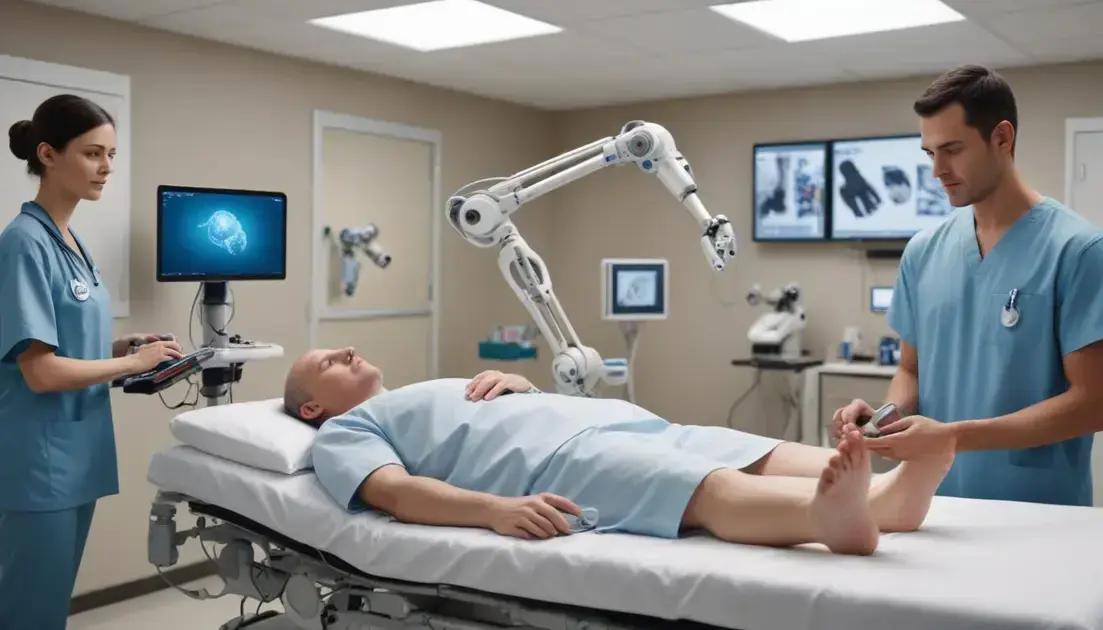
Brain-Computer Interfaces and neural tech are moving from labs into real settings. Here we explore clear, practical uses in medicine, communication, and industry.
These tools convert brain signals into actions that restore movement, enable speech, and speed up tasks.
Medical breakthroughs
In medicine, BCIs help people recover lost function and manage symptoms. Neuroprostheses let users move limbs with thought. Closed-loop implants can reduce seizures by sensing and responding to abnormal activity.
- Motor restoration: implants or external systems control prosthetic limbs or stimulate muscles for walking.
- Rehabilitation: guided training with BCI speeds recovery after stroke by linking intent to feedback.
- Clinical monitoring: neural sensors detect seizures or mood shifts and alert caregivers or trigger therapy.
- Pain and mood: adaptive stimulation may ease chronic pain or support mental health care.
Small, daily tasks can become possible again for many patients as the tech improves.
Assistive communication
For people who cannot speak or move, BCIs offer new ways to send messages. Systems decode intended words or choices and turn them into text or synthetic speech.
Some devices use simple signals to select letters on a screen. More advanced models predict words from patterns of thought, making conversation faster.
These tools can be used at home, in clinics, or on-the-go, and they often learn with the user to get better over time.
Industry and human-machine interaction
In industry, BCI interfaces can speed control of machines and improve safety. Hands-free control helps operators manage robots, drones, or heavy equipment with less physical strain.
- Robotic control: thought-guided arms can perform precise tasks in factories or labs.
- Performance monitoring: neural signals reveal fatigue or attention lapses so systems can pause or warn the worker.
- Training and simulation: BCIs personalize training by tracking mental workload and adapting difficulty.
- Accessibility: workers with injuries can remain productive using assistive neural tools.
These applications can lower errors, reduce downtime, and create safer workflows when paired with good design.
Across all areas, success depends on strong signal decoding, intuitive feedback, and careful user training. Privacy, security, and cost also shape who benefits first.
As devices shrink and algorithms improve, expect more everyday uses that feel natural and useful.
The main idea: Brain-Computer Interfaces turn intent into action in medicine, communication, and industry, with clear benefits and ongoing challenges to solve.
Ethical, privacy and safety challenges to consider
Brain-Computer Interfaces and neural tech raise hard questions about who controls thoughts and data. This section lists the main ethical, privacy, and safety issues to watch.
These challenges affect users, developers, clinicians, and regulators in different ways.
Ethical concerns for users
Consent must be clear and ongoing. Users need simple language about what the device records and why.
Treating people with dignity means giving them choice and control over device use. Designers should avoid bias and ensure fair access.
Privacy risks and data ownership
Neural data can reveal sensitive states like emotions or intent. That makes privacy protections essential.
- Data ownership: define who owns and can share neural data.
- Informed consent: explain storage, sharing, and deletion in plain words.
- Anonymization limits: raw neural traces may re-identify people even after cleanup.
- Third-party access: guard against unexpected access by companies or insurers.
Clear policies and transparent practices reduce surprises for users and families.
Security measures like encryption, access logs, and hardware isolation can stop many leaks. Regular audits help keep protections current.
Safety and technical hazards
Devices can fail, drift, or behave unpredictably. Safety includes both immediate harm and long-term risks.
- Device malfunction: software bugs or hardware faults can cause incorrect outputs.
- Medical risks: implants can cause infection, scarring, or tissue reaction.
- Adaptive errors: learning algorithms might change in unsafe ways over time.
- Adversarial attacks: wrong inputs could be used to hijack control.
Mitigation requires redundant systems, fail-safes, and clear emergency procedures. Testing in realistic settings uncovers hidden issues.
Regulators, clinicians, and engineers must share responsibility. Standards for testing, reporting, and post-market surveillance help spot harms early. Ethical review boards should include diverse voices and lived experience.
Transparency about limits and trade-offs builds trust. Users should get plain reports on device performance, data use, and any incidents.
Overall, addressing ethics, privacy, and safety is as important as improving accuracy. Balancing innovation with robust protections will help ensure neural tech benefits more people while limiting harm.
Adoption roadmap: from research to practical use

Brain-Computer Interfaces and neural tech move from ideas to products through clear, practical steps. A roadmap helps teams, clinicians, and users see what comes next.
Each step balances testing, safety, and user needs so devices become useful and trusted.
Research and prototyping
Start with solid science and repeatable results. Early prototypes test sensors, signal quality, and basic decoding methods.
- Validate signal sources and measurement methods.
- Build simple prototypes to test comfort and fit.
- Run small user studies to gather feedback fast.
- Share data and code for replication and transparency.
Iteration is quick at this stage: small hardware or algorithm changes refine performance before larger trials.
Clinical testing and regulation
After prototypes show promise, move to formal safety and effectiveness studies. Work with ethics boards and regulators early to define endpoints.
- Design trials with clear outcome measures and real users.
- Document safety, device reliability, and expected benefits.
- Engage regulators and get required approvals or clearances.
- Plan for long-term follow-up and post-market surveillance.
Regulatory readiness means clear protocols, risk assessments, and transparent reporting. That builds trust with clinicians and patients.
Manufacturing and quality control come next. Design for scale by selecting robust components and testing assembly processes. Good supply chains lower cost and speed delivery.
Business models and reimbursement matter. Work with payers to show clinical value. Demonstrate cost savings, improved outcomes, or quality-of-life gains to win coverage.
Deployment, training and support
Successful adoption depends on easy setup, good training, and responsive support. Clinicians and users need clear guides and realistic expectations.
- Provide training programs for clinicians, caregivers, and users.
- Offer remote monitoring and technical support to fix issues fast.
- Build privacy and safety features into services and data flows.
- Collect user feedback and update devices through safe software channels.
Iterative updates and user-centered design help devices fit real routines. Privacy, security, and usability guide each rollout stage.
Scaling requires partnerships across research, health systems, manufacturers, and payers. Shared standards and open best practices lower barriers for new teams and users.
In short, a practical roadmap blends research rigor, clear testing, regulatory alignment, and strong user support to move Brain-Computer Interfaces and neural tech from lab concepts into everyday tools.
In short, Brain-Computer Interfaces and neural tech offer real benefits but need strong safety, privacy, and user-focused design. Clear testing and ethical rollout will help these tools reach more people.
FAQ – Brain-Computer Interfaces and Neural Tech
What is a brain-computer interface (BCI)?
A BCI reads brain activity and converts it into commands for devices. It can use noninvasive wearables or implanted sensors to help control prosthetics, type, or operate machines.
Are BCIs safe to use?
Safety varies: noninvasive devices have low medical risk, while implants require surgery and carry higher risks. Rigorous testing, fail-safes, and clinical oversight reduce harm.
How is my neural data protected?
Protecting neural data needs clear consent, strong encryption, and strict access rules. Users should know who owns data, how it is stored, and how to delete or share it.
When will BCIs be common in everyday life?
Wider use depends on better hardware, clear regulations, affordable devices, and proven clinical value. Some assistive BCIs are already available; broader adoption will grow over several years as technology and policy mature.