Edge AI vs. Cloud AI: Optimizing IoT Deployments for 2026
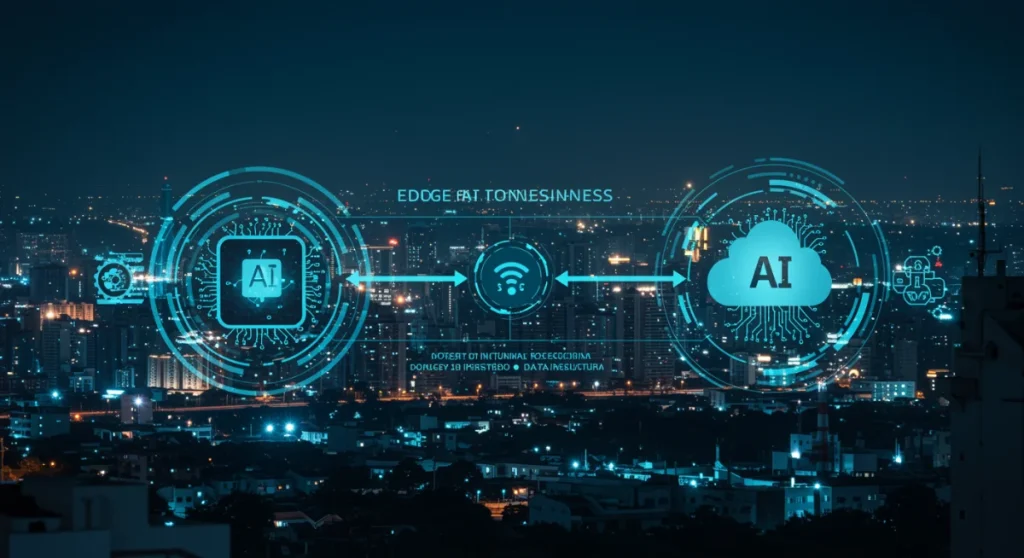
Optimizing IoT deployments in Q3 2026 demands a strategic understanding of Edge AI versus Cloud AI, each offering distinct advantages in processing power, latency, and data management for diverse applications.
As we approach Q3 2026, the landscape of IoT deployments is rapidly evolving, driven by advancements in artificial intelligence. The critical decision for businesses now revolves around whether to leverage Edge AI vs. Cloud AI, a choice that profoundly impacts performance, cost, and overall operational efficiency.
Understanding the Core Concepts: Edge AI and Cloud AI
Before diving into a detailed comparison, it’s essential to grasp the fundamental distinctions between Edge AI and Cloud AI. Both paradigms offer powerful AI capabilities, but their architectural approaches to data processing and intelligence distribution are quite different, leading to varied suitability for specific IoT use cases.
Edge AI involves deploying AI models directly onto local devices or gateways, closer to the data source. This localized processing minimizes reliance on centralized cloud infrastructure, enabling real-time decision-making and reduced data transmission. It’s particularly beneficial for applications where immediate responses are critical.
What is Edge AI?
Edge AI refers to artificial intelligence processing that occurs on hardware at the ‘edge’ of a network, rather than in a centralized cloud server. This means data is processed directly on devices such as sensors, cameras, or embedded systems, rather than being sent to a remote data center.
- Decentralized Processing: Computation happens locally, reducing network dependency.
- Real-time Insights: Enables instant analysis and action without latency delays.
- Enhanced Privacy: Sensitive data can be processed and often stored locally, mitigating privacy concerns.
- Reduced Bandwidth: Only processed insights, not raw data, might be sent to the cloud, saving bandwidth.
This approach transforms how IoT devices interact with their environment, allowing for more autonomous and responsive operations. The efficiency gained at the edge can be a game-changer for many industries.
What is Cloud AI?
Cloud AI, conversely, leverages the vast computational resources of centralized cloud data centers to process and analyze data. IoT devices collect data and transmit it to the cloud, where powerful AI algorithms run, generating insights and making decisions.
- Scalability: Easily scales to handle massive datasets and complex models.
- Centralized Management: AI models and data are managed from a single, accessible location.
- Cost-Effective for Large-Scale Training: Cloud infrastructure offers immense processing power for model training.
- Advanced Analytics: Capable of performing highly complex analytical tasks that require significant resources.
Cloud AI remains the backbone for many large-scale AI applications, especially those requiring extensive data aggregation and complex model training. The choice between these two often hinges on the specific operational demands of the IoT deployment.
Performance Metrics: Latency, Bandwidth, and Processing Power
When evaluating Edge AI vs. Cloud AI for IoT deployments, performance metrics are paramount. These include latency, bandwidth consumption, and the available processing power, all of which directly impact the effectiveness and responsiveness of an IoT system. Understanding these differences is crucial for optimizing your deployment strategy.
Latency, or the delay before a data transfer begins following an instruction, is often the most significant differentiator. Edge AI inherently minimizes latency by processing data closer to the source, which is critical for applications requiring immediate action. Cloud AI, while powerful, introduces network latency due to data transmission to and from remote servers.
Latency Considerations
For applications like autonomous vehicles, industrial automation, or critical infrastructure monitoring, every millisecond counts. Edge AI excels here, providing near real-time responses.
Consider a smart factory where robots need to react instantly to changes on an assembly line. Sending sensor data to the cloud for analysis and then waiting for a command to return would introduce unacceptable delays. With Edge AI, the decision-making happens on-site, ensuring immediate and safe operations. This local processing capability allows for rapid inference, making it ideal for safety-critical systems.
Bandwidth Usage and Network Dependency
Bandwidth is another key factor. IoT deployments often involve numerous devices generating vast amounts of data. Cloud AI requires this raw data to be transmitted to the cloud, potentially consuming significant bandwidth and incurring costs, especially in areas with limited connectivity.
Edge AI, by processing data locally, reduces the volume of data sent over the network. Only critical insights or aggregated data summaries are transmitted to the cloud, drastically lowering bandwidth requirements. This is particularly advantageous in remote locations or environments with unreliable network access, making the system more robust and efficient. The ability to filter and pre-process data at the edge can also significantly reduce cloud storage costs.
Processing Power and Scalability
Cloud AI boasts virtually limitless processing power, making it ideal for training complex AI models and performing high-volume, batch processing tasks. Its scalability is unmatched, allowing businesses to expand their AI capabilities without significant upfront hardware investments.
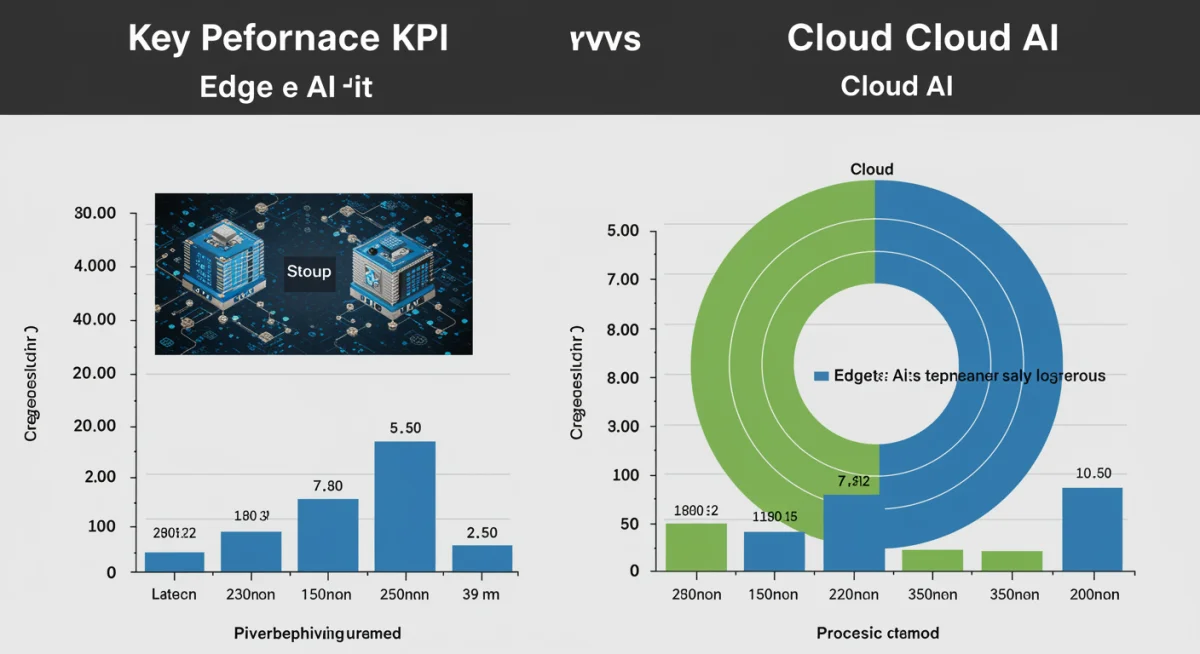
Edge AI devices, while powerful for their size, have constrained processing capabilities compared to the cloud. However, advancements in specialized edge processors (like AI accelerators and NPUs) are rapidly closing this gap for inference tasks. The challenge with edge processing lies in managing and updating numerous distributed devices, which can become complex at scale. The trend is moving towards more intelligent edge devices that can handle increasingly sophisticated AI models locally.
Cost Implications and Economic Efficiency
The financial aspect of deploying AI in IoT is a major consideration for businesses. A thorough cost analysis comparing Edge AI vs. Cloud AI reveals distinct economic models, each with its own advantages and potential pitfalls. Understanding these can help organizations make informed decisions that align with their budget and operational goals.
Initial investment, operational expenses, and long-term scalability costs all play a role. Edge AI often requires a higher upfront hardware investment for specialized devices, but can lead to significant savings on data transmission and cloud processing fees over time. Cloud AI, conversely, typically has lower initial hardware costs but involves ongoing subscription and usage-based fees that can accumulate.
Upfront Investment and Hardware Costs
Deploying Edge AI necessitates investing in intelligent edge devices capable of running AI models. These can include specialized microcontrollers, single-board computers, or industrial PCs equipped with AI accelerators. The cost per device can be higher than a standard IoT sensor, especially for deployments with many endpoints.
For Cloud AI, the initial investment in endpoint hardware is generally lower, as devices primarily need to collect and transmit data. The bulk of the investment shifts to cloud service subscriptions, which are often billed based on usage. This can make Cloud AI more appealing for pilot projects or organizations preferring operational expenditure over capital expenditure.
Operational Expenses: Data Transfer and Cloud Services
Operational costs are where the economic differences between Edge AI and Cloud AI become particularly pronounced. Cloud AI deployments can incur substantial costs related to data transfer (ingress and egress fees), data storage, and the computational resources consumed by AI models running in the cloud.
Edge AI significantly reduces these operational expenses. By processing data locally, only relevant insights or compressed data are sent to the cloud, minimizing data transfer costs. This model is especially cost-effective for high-volume data generating IoT applications, where transmitting all raw data to the cloud would be prohibitively expensive. Furthermore, reduced reliance on constant cloud connectivity can lower charges associated with network usage.
Scalability and Long-Term Cost Management
The scalability of each approach also impacts long-term costs. Cloud AI offers highly elastic scalability, allowing businesses to easily expand or contract their AI processing capabilities as needed, often with a pay-as-you-go model. This flexibility can be cost-effective for fluctuating workloads or unpredictable growth.
Scaling Edge AI deployments involves managing and upgrading a distributed network of devices. While individual device costs might be higher, the cumulative savings on bandwidth and cloud processing can make it more economical for large-scale, long-term deployments where data generation is constant and localized processing is a priority. Strategic planning for device management and updates is crucial for managing these costs effectively.
Security and Privacy Considerations in IoT AI
Security and privacy are paramount concerns in any IoT deployment, and the choice between Edge AI vs. Cloud AI has significant implications for both. Data breaches, unauthorized access, and compliance with data protection regulations are critical factors that businesses must address when designing their AI-powered IoT solutions.
Edge AI often presents inherent advantages in data privacy by keeping sensitive information localized, reducing the attack surface associated with data transit. However, securing numerous distributed edge devices introduces its own set of challenges. Cloud AI, while offering robust security measures from providers, centralizes data, making it a potentially lucrative target for cybercriminals.
Data Locality and Privacy
One of the strongest arguments for Edge AI in terms of privacy is data locality. By processing data directly on the device, sensitive information can be analyzed and acted upon without ever leaving the local environment. This minimizes the risk of data interception during transit to the cloud and helps businesses comply with strict data residency and privacy regulations like GDPR or CCPA.
For example, in healthcare IoT, patient data processed at the edge can provide immediate insights while keeping protected health information (PHI) within the local network, drastically reducing exposure. This localized processing ensures that only aggregated or anonymized data, if any, is ever transmitted to the cloud, enhancing user trust and regulatory compliance.
Security Challenges at the Edge
Despite the privacy benefits, securing Edge AI devices presents unique challenges. Edge devices are often deployed in physically exposed or less controlled environments, making them susceptible to tampering or physical theft. Each device represents a potential entry point for attackers, requiring robust security measures at the hardware and software levels.
- Physical Security: Protecting devices from unauthorized access or theft.
- Software Vulnerabilities: Ensuring secure boot, regular patching, and secure firmware updates.
- Network Security: Isolating edge devices and securing communication channels.
- Authentication and Authorization: Implementing strong access controls for device management.
A comprehensive security strategy for Edge AI involves a multi-layered approach, from hardware-based security features to secure software development practices and continuous monitoring.
Cloud Security and Centralized Vulnerabilities
Cloud AI benefits from the extensive security infrastructure and expertise of major cloud providers. These providers invest heavily in securing their data centers, networks, and services, offering advanced features like encryption, identity and access management, and threat detection.
However, centralizing vast amounts of data in the cloud also creates a single, high-value target for sophisticated cyberattacks. A breach in a cloud environment can expose data from numerous customers simultaneously. While cloud providers offer robust security, shared responsibility models mean that users are still accountable for securing their applications, data, and configurations within the cloud environment. The secure configuration of cloud resources is paramount to prevent vulnerabilities.
Use Cases and Application Suitability
The choice between Edge AI vs. Cloud AI is not a one-size-fits-all decision; it heavily depends on the specific use case and the unique requirements of the IoT application. Each approach excels in different scenarios, and sometimes, a hybrid model offers the best of both worlds. Understanding these distinctions is key to optimizing IoT deployments for Q3 2026.
Edge AI is typically favored for applications demanding low latency, high privacy, and operation in environments with limited connectivity. Cloud AI shines in scenarios requiring vast computational power for complex analytics, large-scale model training, and centralized data aggregation.
Edge AI Dominant Use Cases
Edge AI is particularly well-suited for applications where immediate decision-making and local data processing are critical. These include:
- Autonomous Vehicles: Real-time object detection, navigation, and collision avoidance without relying on continuous cloud connectivity.
- Industrial Automation: Predictive maintenance on factory floors, quality control, and robotic arm control, where milliseconds matter for operational safety and efficiency.
- Smart Security Cameras: On-device facial recognition, anomaly detection, and motion sensing, reducing the need to stream all video footage to the cloud.
- Remote Monitoring: Oil rigs, agricultural sensors, or environmental monitoring stations in areas with intermittent or no network access, processing data locally and only sending alerts.
In these scenarios, the benefits of reduced latency, improved privacy, and lower bandwidth consumption significantly outweigh the challenges of managing distributed edge devices.
Cloud AI Dominant Use Cases
Cloud AI remains indispensable for applications that require extensive data aggregation, complex model training, and centralized intelligence. Its strengths lie in:
- Large-Scale Data Analytics: Processing vast datasets from numerous IoT devices to identify long-term trends, optimize business processes, and generate strategic insights.
- AI Model Training: Developing and refining sophisticated machine learning models that require immense computational resources, often utilizing specialized hardware like GPUs and TPUs in the cloud.
- Predictive Analytics for Customer Behavior: Analyzing aggregated data from smart home devices or retail sensors to personalize experiences and forecast consumer trends.
- Global IoT Fleet Management: Overseeing and updating thousands or millions of devices, managing software deployments, and collecting high-level performance metrics from a centralized platform.
For these applications, the cloud’s scalability, powerful processing capabilities, and centralized management offer unparalleled advantages, allowing businesses to extract maximum value from their IoT data.
The Rise of Hybrid AI Architectures
As IoT deployments grow in complexity and scale, a clear trend is emerging: the integration of both Edge AI and Cloud AI into hybrid architectures. This approach seeks to combine the strengths of both paradigms, creating more resilient, efficient, and intelligent IoT systems. By strategically distributing AI workloads, organizations can achieve optimal performance while managing costs and ensuring security.
Hybrid AI recognizes that not all data processing needs to occur in one location. Certain tasks are better suited for the edge, while others benefit from the cloud’s vast resources. The challenge lies in intelligently orchestrating these two environments to work seamlessly together.
Leveraging the Best of Both Worlds
A hybrid model allows for the optimization of resource allocation. Real-time inference and immediate decision-making can happen at the edge, leveraging Edge AI’s low latency and reduced bandwidth. Concurrently, data aggregation, complex model retraining, and long-term analytics can be offloaded to the cloud, taking advantage of Cloud AI’s scalability and computational power.
For instance, a smart city surveillance system might use Edge AI on individual cameras for immediate object detection and anomaly flagging. Only flagged events or aggregated metadata would then be sent to the cloud for further, more complex analysis, long-term storage, and global pattern recognition. This reduces network strain and ensures privacy for non-critical data, while still enabling comprehensive oversight.
Data Orchestration and Management
Implementing a successful hybrid AI architecture requires robust data orchestration and management capabilities. This involves designing intelligent data pipelines that determine what data is processed where, when, and how. Tools and platforms that facilitate seamless data flow between edge devices and the cloud are becoming increasingly vital.
- Intelligent Data Filtering: Deciding which data points are processed locally and which are sent to the cloud.
- Model Deployment and Updates: Efficiently deploying and updating AI models across numerous edge devices from a central cloud platform.
- Edge-to-Cloud Synchronization: Ensuring data consistency and integrity across distributed environments.
- Unified Monitoring: Gaining a holistic view of both edge and cloud AI operations for performance and security.
The complexity of managing these interconnected systems means that robust platforms and skilled personnel are essential for effective deployment and maintenance. The ability to monitor and manage AI models across diverse environments will be a critical differentiator.
Future Trends in Hybrid AI
Looking ahead to Q3 2026, hybrid AI architectures are expected to become the standard for complex IoT deployments. Advances in federated learning, where AI models are trained collaboratively across multiple decentralized edge devices without sharing raw data, will further enhance privacy and efficiency. Additionally, the development of more powerful and energy-efficient edge hardware will enable increasingly sophisticated AI models to run locally.
The focus will be on creating highly adaptable and intelligent systems that can dynamically shift workloads between the edge and the cloud based on network conditions, processing demands, and application priorities. This dynamic allocation will maximize efficiency and resilience, making IoT systems more intelligent and autonomous than ever before.
Strategic Planning for Q3 2026 IoT Deployments
Optimizing IoT deployments for Q3 2026 requires a forward-thinking strategic plan that carefully weighs the advantages and disadvantages of Edge AI vs. Cloud AI. The decision isn’t merely technical; it’s a business imperative that impacts operational efficiency, cost-effectiveness, security posture, and the ability to innovate. A well-defined strategy will ensure that your IoT ecosystem is robust, scalable, and future-proof.
Organizations must assess their specific needs, considering factors like data volume, latency requirements, security mandates, and available budget. This comprehensive evaluation will guide the selection of the most appropriate AI architecture, whether it’s purely edge, purely cloud, or a sophisticated hybrid model.
Assessing Your Specific Needs
The first step in strategic planning is a thorough assessment of your IoT deployment’s unique requirements. Ask critical questions such as:
- What are the latency requirements for your applications? Do decisions need to be made in milliseconds, or can a few seconds of delay be tolerated?
- How much data will your devices generate? Is it feasible to transmit all raw data to the cloud, or is local pre-processing necessary?
- What are the security and privacy regulations governing your data? Can sensitive data leave local premises, or must it remain at the edge?
- What is your budget for hardware, software, and ongoing operational costs? Can you afford significant upfront capital expenditure, or do you prefer a pay-as-you-go model?
- What is the availability and reliability of network connectivity at your deployment sites? Will devices operate in remote areas with limited bandwidth?
Answers to these questions will provide a clear direction, helping to narrow down the most suitable AI architecture. A detailed analysis of each factor will reveal the economic and technical feasibility of different approaches.
Building a Future-Proof Architecture
Regardless of the chosen primary architecture, building a future-proof IoT deployment involves incorporating elements of flexibility and adaptability. The technological landscape is constantly evolving, and your system should be able to integrate new advancements without a complete overhaul. This often points towards hybrid solutions that can scale and adapt.
Consider the long-term vision for your IoT strategy. Will your data processing needs become more complex? Will the number of connected devices grow exponentially? An architecture that allows for modular expansion and seamless integration of new AI models, whether at the edge or in the cloud, will save significant resources in the long run. Investing in open standards and interoperable platforms can also greatly enhance future adaptability.
Partnering and Expertise
Navigating the complexities of Edge AI and Cloud AI often requires specialized expertise. Organizations may benefit from partnering with technology providers, system integrators, or AI consultants who possess deep knowledge in these areas. Leveraging external expertise can accelerate deployment, mitigate risks, and ensure that best practices are followed.
Furthermore, investing in training for internal teams on both edge and cloud technologies will be crucial. As AI becomes more ubiquitous, a skilled workforce capable of managing and optimizing these sophisticated systems will be a key competitive advantage. The convergence of IT and operational technology (OT) expertise will define successful IoT deployments in the coming years, ensuring both technological prowess and domain-specific understanding.
| Key Aspect | Description |
|---|---|
| Latency | Edge AI offers ultra-low latency for real-time decisions; Cloud AI has higher latency due to data transfer. |
| Cost Model | Edge AI has higher upfront hardware costs, lower operational data transfer fees. Cloud AI has lower hardware, higher ongoing cloud service fees. |
| Security & Privacy | Edge AI enhances data privacy by local processing; Cloud AI offers robust centralized security but with a larger attack surface. |
| Scalability | Cloud AI scales easily for complex model training; Edge AI scales by device count, with management complexity. |
Frequently Asked Questions About Edge AI vs. Cloud AI
The primary advantage of Edge AI is its ability to process data locally, minimizing latency and enabling real-time decision-making. This is crucial for applications requiring immediate responses, such as autonomous systems or critical infrastructure monitoring, where network delays are unacceptable and can impact safety or efficiency.
Cloud AI is a better choice when IoT deployments require vast computational power for complex AI model training, large-scale data aggregation, and advanced analytics. It offers unparalleled scalability and centralized management for analyzing data from millions of devices, identifying global trends, and optimizing business strategies that don’t demand ultra-low latency.
Edge AI significantly enhances data privacy by processing sensitive information directly on the device, reducing the need to transmit raw, potentially identifiable data to the cloud. This localized processing minimizes the risk of data breaches during transmission and helps organizations comply with stringent data protection regulations like GDPR, keeping sensitive data within a controlled, local environment.
Yes, hybrid AI architectures, combining both Edge AI and Cloud AI, are increasingly common and effective. This approach leverages Edge AI for real-time local processing and immediate actions, while using Cloud AI for complex model training, long-term data storage, and aggregated analytics. It optimizes resource allocation, balances performance with cost, and enhances overall system resilience.
Edge AI typically involves higher upfront hardware investment but lower ongoing operational costs due to reduced data transfer and cloud processing fees. Cloud AI has lower initial hardware costs but incurs ongoing subscription and usage-based fees for data storage, transfer, and computation, which can accumulate significantly over time, especially with large data volumes.
Conclusion
The strategic decision between Edge AI and Cloud AI for IoT deployments in Q3 2026 is multifaceted, requiring a deep understanding of performance, cost, security, and application-specific needs. While Edge AI excels in scenarios demanding real-time responsiveness, enhanced privacy, and reduced bandwidth, Cloud AI offers unparalleled scalability and computational power for complex analytics and model training. The emerging trend towards hybrid architectures, intelligently combining the strengths of both, offers a flexible and robust path forward. Ultimately, a data-driven assessment tailored to an organization’s unique operational context will be key to optimizing IoT deployments and unlocking the full potential of AI.