
The EU AI Act: 5 Immediate Compliance Steps for US Tech Startups to Avoid Penalties (Recent Updates)
The European Union’s Artificial Intelligence Act (EU AI Act), slated for full implementation in 2026, represents a monumental shift in how artificial intelligence will be developed, deployed, and used globally. For US tech startups, often at the forefront of AI innovation, this regulation is not merely a distant European concern but an immediate and critical challenge that demands proactive engagement. The Act’s extraterritorial reach means that any US company offering AI systems or services to users within the EU, or whose AI system’s output is used in the EU, will fall under its purview. Failure to comply could result in substantial penalties, reputational damage, and a significant hindrance to market access.
This comprehensive guide delves into the intricacies of the EU AI Act, with a specific focus on its implications for US tech startups. We will outline five immediate and actionable compliance steps that these companies must undertake to navigate the upcoming regulatory landscape successfully, ensuring they are well-prepared for 2026 and beyond. Understanding and implementing these steps now is not just about avoiding penalties; it’s about establishing a foundation for ethical, trustworthy, and globally competitive AI development.
Understanding the EU AI Act: A Primer for US Tech Startups
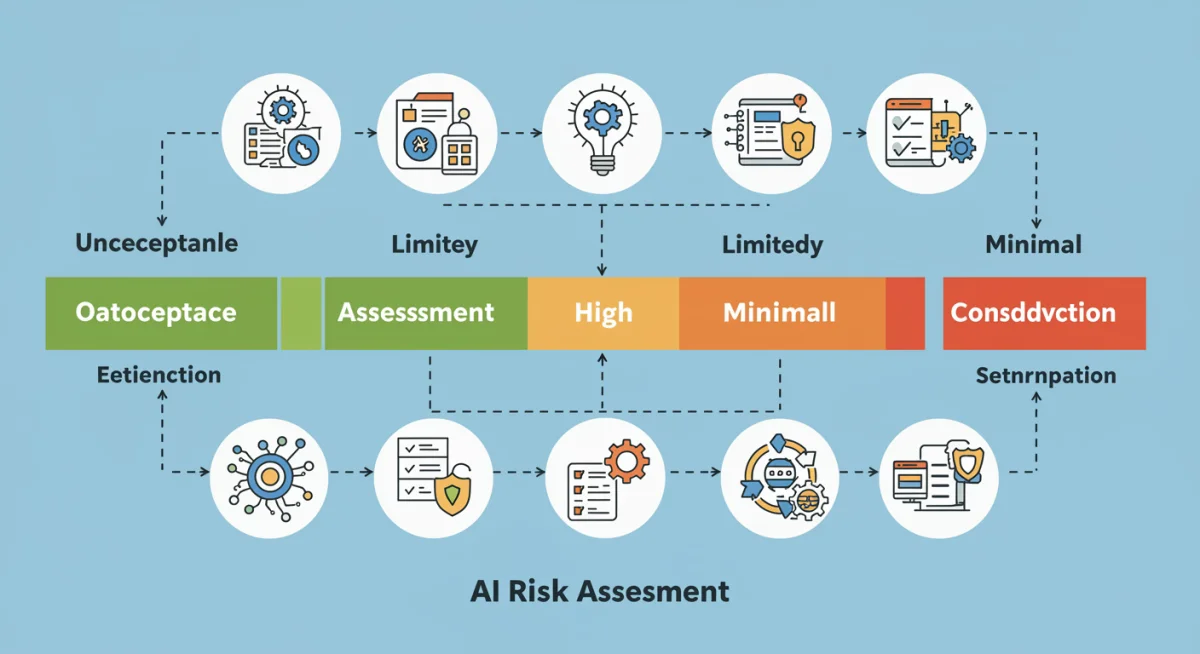
The EU AI Act is the world’s first comprehensive legal framework on artificial intelligence. Its primary objective is to ensure that AI systems placed on the Union market and used in the Union are safe and respect existing laws on fundamental rights and EU values. The Act employs a risk-based approach, categorizing AI systems into four levels: unacceptable risk, high risk, limited risk, and minimal risk. Each category comes with varying degrees of regulatory scrutiny and compliance obligations.
For US tech startups, the most significant impact will likely stem from the ‘high-risk’ category. AI systems deemed high-risk include those used in critical infrastructure, education, employment, law enforcement, migration, and the administration of justice. If your startup’s AI product or service falls into this category, the compliance burden will be considerably higher, demanding rigorous conformity assessments, risk management systems, data governance, human oversight, and transparency requirements.
Recent updates to the Act have further clarified its scope and strengthened certain provisions. These include expanded definitions, stricter requirements for general-purpose AI (GPAI) models, and enhanced protection for fundamental rights. US startups cannot afford to wait until 2026; the time to assess, adapt, and implement changes is now.
Immediate Compliance Step 1: Conduct a Comprehensive AI System Inventory and Risk Assessment
The first and most critical step for any US tech startup is to gain a complete understanding of its AI landscape. This involves meticulously identifying every AI system, model, and application currently in development, deployed, or planned for future release. Once identified, each system must undergo a thorough risk assessment to determine its classification under the EU AI Act.
Inventorying Your AI Portfolio
- Identify all AI systems: This includes not only customer-facing products but also internal tools, algorithms, and data processing pipelines that utilize AI. Document their purpose, data inputs, outputs, and deployment context.
- Categorize AI components: Distinguish between foundational models, specific applications, and third-party AI components integrated into your systems.
- Map data flows: Understand where data originates, how it’s processed by AI, and where the outputs are used, especially concerning EU citizens or operations.
Performing a Risk Assessment
Based on the inventory, each AI system must be evaluated against the EU AI Act’s risk categories. This is not a trivial exercise; it requires a deep understanding of the Act’s definitions and criteria.
- Unacceptable Risk: These systems are outright banned (e.g., social scoring by governments, real-time remote biometric identification in public spaces for law enforcement, with limited exceptions). Ensure your systems do not fall into this category.
- High Risk: This is where most of the regulatory burden lies. Systems impacting fundamental rights, safety, or critical infrastructure are likely to be classified as high-risk. Examples include AI used in recruitment, credit scoring, medical devices, or autonomous vehicles. If your system is high-risk, prepare for extensive compliance requirements.
- Limited Risk: Systems with specific transparency obligations (e.g., chatbots, deepfakes). Users must be informed they are interacting with AI.
- Minimal Risk: The vast majority of AI systems, with no specific obligations beyond existing legislation. However, even these should adhere to voluntary codes of conduct.
This initial assessment will dictate the subsequent compliance efforts. It’s advisable to engage legal counsel specializing in AI regulation to ensure accurate classification and interpretation of the Act’s provisions.
Immediate Compliance Step 2: Establish Robust Data Governance and Quality Frameworks
Data is the lifeblood of AI, and the EU AI Act places significant emphasis on the quality, integrity, and governance of data used to train, validate, and test AI systems, especially those deemed high-risk. Poor data quality can lead to biased or inaccurate AI outputs, which in turn can have severe consequences, particularly in sensitive applications.
Key Aspects of Data Governance for AI
- Data Collection and Acquisition: Ensure that all data used for AI development is collected lawfully and ethically. This includes obtaining proper consent where necessary (e.g., under GDPR) and ensuring data minimization principles are applied.
- Data Quality and Representativeness: High-risk AI systems require high-quality datasets that are relevant, representative, sufficiently large, and free from errors and biases. Implement processes for data cleaning, validation, and curation.
- Bias Detection and Mitigation: Actively identify and mitigate potential biases in training data that could lead to discriminatory outcomes. This involves regular audits of datasets for fairness and representativeness across various demographic groups.
- Data Documentation and Lineage: Maintain comprehensive documentation of data sources, collection methods, pre-processing steps, and any transformations applied. This ensures traceability and auditability, crucial for demonstrating compliance.
- Data Security and Privacy: Implement robust security measures to protect AI training data from unauthorized access, breaches, or misuse. Adhere to data protection regulations like GDPR, which are intrinsically linked to the AI Act.
US startups must invest in data scientists, AI ethicists, and data governance specialists to build and maintain these frameworks. This step is foundational not only for EU AI Act compliance but also for building trustworthy and responsible AI systems that perform reliably and ethically.
Immediate Compliance Step 3: Implement a Comprehensive Risk Management System
For high-risk AI systems, the EU AI Act mandates the establishment, implementation, documentation, and maintenance of a robust risk management system throughout the AI system’s entire lifecycle. This is an ongoing process, not a one-time task.
Components of an Effective Risk Management System
- Risk Identification: Continuously identify foreseeable risks that the AI system may pose to the health and safety or fundamental rights of persons. This includes risks related to accuracy, robustness, cybersecurity, and potential discriminatory impacts.
- Risk Analysis and Evaluation: Systematically analyze and evaluate the identified risks. This involves assessing the severity of potential harm and the likelihood of its occurrence.
- Risk Mitigation: Develop and implement appropriate risk mitigation measures. This could involve redesigning the AI system, improving data quality, enhancing human oversight mechanisms, or implementing safeguards.
- Post-Market Monitoring: Once deployed, the AI system must be continuously monitored for new or emerging risks. This requires collecting data on its performance, incidents, and potential adverse impacts.
- Documentation and Record-Keeping: Maintain detailed records of all risk management activities, including risk assessments, mitigation strategies, and monitoring results. This documentation will be crucial during conformity assessments and audits.
- Human Oversight: For high-risk AI systems, ensure that human oversight mechanisms are in place. This means that human beings can effectively oversee the AI system’s operations and intervene if necessary, without being overridden by automation.
This system should be integrated into the startup’s existing product development and quality management processes. It requires a multidisciplinary approach, involving engineers, product managers, legal teams, and compliance officers to ensure all angles are covered.
Immediate Compliance Step 4: Prioritize Transparency and Explainability
Transparency and explainability are core tenets of the EU AI Act, particularly for high-risk AI systems and systems interacting with humans. Users and affected individuals have a right to understand how AI systems operate, what data they use, and how decisions are made. For US tech startups, this means moving beyond proprietary ‘black box’ models to embrace greater openness.
Key Transparency and Explainability Requirements
- Information for Users: High-risk AI systems must be designed and developed in such a way that their operation is sufficiently transparent to enable users to interpret the system’s output and use it appropriately. This includes providing clear and comprehensive instructions for use.
- Automated Logging: High-risk AI systems must automatically record events (‘logs’) throughout their operation, allowing for post-market monitoring, incident investigation, and demonstrating conformity with the Act. These logs should be retained for a specified period.
- Explainable AI (XAI) Techniques: While not explicitly mandating specific XAI techniques, the Act implies the need for methods that can provide insights into an AI system’s decision-making process. This could involve feature importance scores, local interpretable model-agnostic explanations (LIME), or shapley additive explanations (SHAP).
- Notifying Users of AI Interaction: For limited-risk systems (e.g., chatbots, deepfakes), users must be informed that they are interacting with an AI system or that content has been artificially generated or manipulated.
- Documentation and Technical File: A comprehensive technical file must be maintained for high-risk AI systems, containing detailed information about the system’s design, development, training data, risk management system, and conformity assessment procedures. This file will be subject to scrutiny by authorities.
Developing explainable AI can be technically challenging, but it is essential for building trust and meeting regulatory obligations. US startups should start evaluating and integrating XAI tools and methodologies into their development workflows now.

Immediate Compliance Step 5: Prepare for Conformity Assessments and Post-Market Monitoring
For high-risk AI systems, the EU AI Act requires a conformity assessment procedure before the system can be placed on the market or put into service. This assessment verifies that the AI system complies with all the requirements of the Act. Furthermore, compliance doesn’t end at deployment; ongoing post-market monitoring is mandatory.
Navigating Conformity Assessments
- Self-Assessment vs. Third-Party Assessment: Depending on the type of high-risk AI system, startups may be able to conduct a self-assessment (internal control) or may require assessment by a notified body (a third-party conformity assessment body). It’s crucial to determine which path applies to your systems.
- Technical Documentation: A comprehensive technical file (as mentioned in Step 4) is central to the conformity assessment. Ensure it is meticulously prepared, up-to-date, and readily available for review.
- Quality Management System (QMS): For high-risk AI systems, the Act often requires a robust QMS to ensure consistent compliance throughout the system’s lifecycle. If your startup doesn’t have one, begin developing it.
- Declaration of Conformity (DoC): Upon successful completion of the conformity assessment, the provider (your startup) must draw up an EU declaration of conformity, attesting that the AI system meets the requirements of the Act.
- CE Marking: For many high-risk AI systems, affixing the CE marking will be required, indicating conformity with EU legislation.
Establishing Post-Market Monitoring Systems
- Continuous Performance Monitoring: Implement systems to continuously monitor the AI system’s performance, accuracy, and potential for adverse impacts once deployed.
- Incident Reporting: Establish clear procedures for reporting serious incidents or malfunctions of high-risk AI systems to relevant market surveillance authorities.
- Corrective Actions: Be prepared to take immediate corrective actions if non-compliance or new risks are identified during post-market monitoring.
- Feedback Loops: Create mechanisms to collect feedback from users and affected parties regarding the AI system’s performance and impact.
This step requires significant organizational commitment and resources. US startups should start identifying potential notified bodies, familiarizing themselves with the assessment procedures, and building the internal capabilities to manage ongoing compliance.
Beyond Compliance: Embracing Ethical AI Innovation
While the immediate focus for US tech startups must be on achieving EU AI Act compliance to avoid penalties and maintain market access, it’s essential to view this regulation not just as a burden, but as an opportunity. The Act encourages the development of trustworthy, human-centric AI, which aligns with the growing global demand for ethical technology.
By proactively addressing the requirements of the EU AI Act, US startups can:
- Build Consumer Trust: Demonstrating compliance and a commitment to ethical AI can significantly enhance consumer trust and brand reputation, giving your startup a competitive edge.
- Foster Responsible Innovation: The Act’s focus on risk management, data quality, and transparency can lead to more robust, reliable, and fair AI systems, ultimately driving better innovation.
- Gain Market Access: Compliance is a prerequisite for operating in the lucrative EU market, ensuring your products and services can reach a broader audience.
- Influence Future Regulations: By actively engaging with the regulatory framework, US startups can contribute to best practices that may influence future AI regulations globally, including in the United States.
The landscape of AI regulation is rapidly evolving. The EU AI Act is a pioneering piece of legislation that will undoubtedly set a precedent for other jurisdictions. US tech startups that embrace these changes early will be better positioned for long-term success in the global AI economy.
Conclusion: Proactive Preparation is Key for EU AI Act Compliance
The 2026 deadline for the full implementation of the EU AI Act may seem distant, but for US tech startups, the work begins now. The five immediate compliance steps outlined – comprehensive inventory and risk assessment, robust data governance, a comprehensive risk management system, prioritization of transparency and explainability, and preparation for conformity assessments and post-market monitoring – form a critical roadmap.
Ignoring the EU AI Act is not an option for any US tech startup with global aspirations. The potential for hefty fines, market exclusion, and reputational damage is too great. Instead, by proactively integrating these compliance measures into their core development and operational strategies, US startups can not only meet regulatory obligations but also emerge as leaders in the ethical and responsible development of artificial intelligence. This is an investment not just in compliance, but in the future of AI itself.