Ransomware Defense Strategies: Efficacy of 3 Top Solutions

This article evaluates three leading ransomware defense strategies – advanced endpoint protection, immutable backups, and Security Information and Event Management (SIEM) with Extended Detection and Response (XDR) – assessing their efficacy in the complex current market.
In today’s volatile digital landscape, understanding effective ransomware defense strategies is not just an advantage; it’s a necessity. Ransomware attacks continue to evolve, becoming more sophisticated and impactful, making robust protection paramount for any organization. This article delves into the efficacy of three leading solutions currently dominating the cybersecurity market.
The Escalating Ransomware Threat Landscape
The threat of ransomware has grown exponentially, moving beyond simple encryption to include data exfiltration and double extortion. Organizations face immense pressure to protect their critical assets from these relentless attacks, which can cripple operations and incur significant financial and reputational damage. A proactive and multi-layered defense is no longer optional.
Attackers frequently exploit vulnerabilities in software, phishing campaigns, and weak access controls to gain initial entry. Once inside, they move laterally, seeking out valuable data and systems to encrypt. The goal is to maximize disruption and leverage the victim’s desperation for a quick recovery.
Common Attack Vectors
Understanding how ransomware penetrates systems is the first step in building a resilient defense. Attackers constantly refine their methods, making it crucial for organizations to stay informed and adapt their security posture.
- Phishing Emails: The most prevalent method, tricking users into revealing credentials or downloading malicious attachments.
- Exploiting Software Vulnerabilities: Unpatched systems provide easy entry points for ransomware operators.
- Remote Desktop Protocol (RDP) Exploits: Weak or exposed RDP configurations are often targeted for initial access.
- Supply Chain Attacks: Compromising a trusted vendor to gain access to multiple organizations downstream.
The financial and operational consequences of a ransomware attack can be devastating. Beyond the ransom payment itself, businesses face downtime, data recovery costs, legal fees, regulatory fines, and lasting damage to customer trust. Therefore, investing in robust defense mechanisms is a strategic imperative.
Advanced Endpoint Protection Platforms (EPP)
Advanced Endpoint Protection Platforms (EPP) represent a cornerstone of modern ransomware defense strategies. These solutions go beyond traditional antivirus, leveraging machine learning, behavioral analysis, and threat intelligence to detect and prevent sophisticated threats at the endpoint level. They are designed to stop ransomware before it can execute or spread.
EPP solutions provide comprehensive visibility into endpoint activities, continuously monitoring for suspicious processes, file modifications, and network connections. By understanding normal behavior, they can quickly identify anomalies that might indicate a ransomware attack in progress. This proactive approach is vital in preventing widespread infection.
Key Features of Modern EPPs
Modern EPPs integrate multiple security technologies to offer a robust defense. Their capabilities extend far beyond signature-based detection, which is often insufficient against polymorphic and fileless malware.
- Behavioral Analysis: Detects malicious activity based on observed patterns, rather than known signatures.
- Machine Learning: Identifies new and evolving threats by analyzing vast datasets of malware characteristics.
- Automated Remediation: Can automatically isolate infected endpoints and roll back malicious changes.
- Threat Intelligence Integration: Utilizes real-time data on emerging threats to enhance detection capabilities.
While EPPs are highly effective at preventing many ransomware variants, they are not a silver bullet. Attackers continually seek to bypass these defenses, often through advanced social engineering or zero-day exploits. Therefore, EPPs should be part of a broader security ecosystem, complementing other defense layers to achieve maximum protection.
Immutable Backups and Disaster Recovery
Even the most advanced preventative measures can sometimes fail. This is where immutable backups and robust disaster recovery plans become indispensable components of effective ransomware defense strategies. Immutable backups are designed so that once data is written, it cannot be altered or deleted, even by an attacker with administrative privileges. This ensures that a clean, uncorrupted copy of data is always available for recovery.
The principle behind immutability is to create a secure, isolated copy of critical data that is impervious to ransomware encryption or deletion. This provides a crucial last line of defense, allowing organizations to restore their operations quickly and minimize downtime, even after a successful attack. Without immutable backups, a ransomware incident can lead to permanent data loss.
Implementing Immutable Backup Solutions
There are several approaches to implementing immutable backups, each offering varying levels of protection and recovery capabilities. The choice often depends on an organization’s specific needs, data volume, and regulatory requirements.
- Object Storage with Immutability: Cloud object storage services often offer ‘WORM’ (Write Once, Read Many) policies, making data immutable for a specified period.
- Tape Backups: Traditional air-gapped tape backups remain a highly secure, albeit slower, option for immutability.
- Dedicated Immutable Storage Appliances: On-premises solutions designed specifically for ransomware resilience, often with built-in immutability features.
- Versioning and Snapshots: While not strictly immutable, frequent snapshots and versioning can offer a recovery point before encryption, provided the backup system itself isn’t compromised.
A comprehensive disaster recovery plan, built around these immutable backups, is essential. This plan should detail the steps for data restoration, system recovery, and business continuity. Regular testing of these plans is crucial to ensure their effectiveness when a real incident occurs, minimizing panic and maximizing efficiency during a crisis.
SIEM and XDR: Unified Threat Detection
Security Information and Event Management (SIEM) coupled with Extended Detection and Response (XDR) offers a unified approach to threat detection and response, forming a critical pillar of modern ransomware defense strategies. SIEM collects and analyzes security logs and events from across an organization’s IT infrastructure, providing a centralized view of security posture. XDR extends this capability by integrating data from endpoints, networks, cloud environments, and email, offering a broader and deeper context for threat detection.
The synergy between SIEM and XDR allows for more accurate and faster identification of sophisticated attacks, including those involving ransomware. By correlating events from diverse sources, these platforms can detect subtle indicators of compromise that might be missed by individual security tools. This holistic view is crucial for understanding the full scope of an attack and orchestrating an effective response.
Benefits of an Integrated SIEM/XDR Approach
An integrated SIEM/XDR solution provides unparalleled visibility and automation in the face of evolving threats. It transforms raw security data into actionable intelligence, enabling security teams to respond proactively rather than reactively.
- Enhanced Visibility: Comprehensive data collection across all layers of the IT environment.
- Proactive Threat Hunting: Tools to search for unknown threats and attack patterns.
- Automated Incident Response: Ability to trigger automated actions to contain and remediate threats.
- Reduced Alert Fatigue: Intelligent correlation reduces the volume of false positives, allowing analysts to focus on real threats.
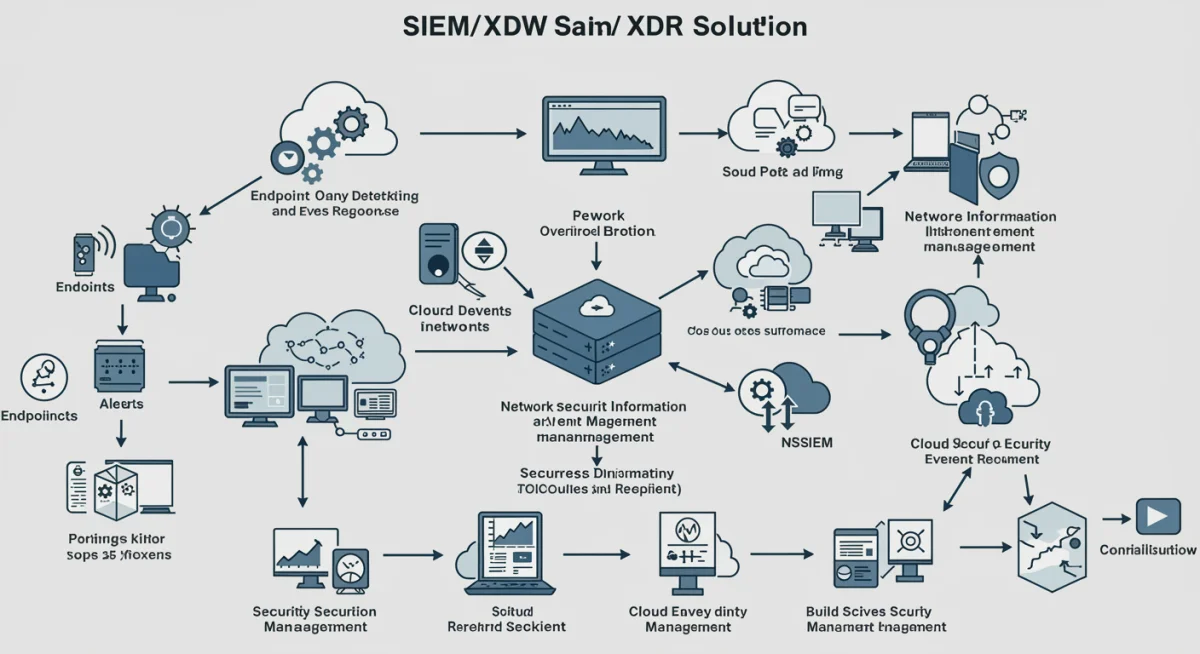
The efficacy of SIEM/XDR in ransomware defense lies in its ability to detect early-stage attack activities, such as reconnaissance, lateral movement, or privilege escalation, before encryption payloads are deployed. This early detection allows security teams to intervene and neutralize the threat, preventing data loss and operational disruption. It represents a significant leap forward from traditional siloed security tools.
Comparing Efficacy in Current Market Conditions
Evaluating the efficacy of these three leading ransomware defense strategies in today’s dynamic market requires understanding their strengths, weaknesses, and how they complement each other. No single solution offers complete protection against all ransomware variants and attack vectors. A truly resilient defense integrates these strategies into a comprehensive security program.
Advanced EPPs excel at preventing known and unknown ransomware at the endpoint level, acting as the first line of defense. They are crucial for stopping initial infection attempts and containing outbreaks. However, highly determined attackers or zero-day exploits can sometimes bypass EPPs, necessitating additional layers of security.
Strategic Integration for Maximum Protection
The optimal approach involves a layered security model where each solution reinforces the others. This creates a robust defense-in-depth strategy that significantly reduces the attack surface and improves detection and response capabilities.
- EPP as Frontline: Blocks most common threats and initial infection attempts.
- SIEM/XDR for Detection: Identifies sophisticated attacks and lateral movement that bypass EPP.
- Immutable Backups as Last Resort: Guarantees data recovery even if all other defenses fail.
- Security Awareness Training: Educates users to recognize phishing and social engineering attempts, mitigating the most common attack vector.
In current market conditions, where ransomware attacks are increasingly sophisticated and targeted, organizations cannot afford to rely on a single defense mechanism. The efficacy of each solution is amplified when they are integrated, providing a holistic and resilient cybersecurity posture. This combined approach offers the best chance of minimizing the impact of a ransomware incident.
Future Trends and Adaptations in Ransomware Defense
The landscape of ransomware defense strategies is continuously evolving, driven by advancements in attacker tactics and technological innovations. Looking ahead, we can anticipate several key trends that will shape how organizations protect themselves. Proactive adaptation to these changes will be critical for maintaining a strong defensive posture against future threats.
One significant trend is the increased adoption of AI and machine learning not only for detection but also for automated response. As attacks become faster and more complex, human reaction times may be insufficient. AI-driven automation can help contain threats in milliseconds, significantly reducing their impact.
Emerging Defense Technologies
New technologies are constantly being developed to counter the latest ransomware threats. Staying informed about these advancements is key to building a forward-looking security strategy.
- Zero Trust Architecture: Verifies every user and device, regardless of whether they are inside or outside the network perimeter.
- Deception Technologies: Deploys fake assets and decoys to lure attackers, gather intelligence, and detect their presence early.
- Confidential Computing: Protects data in use by performing computations within a hardware-protected enclave, making it inaccessible even to privileged insiders.
- Blockchain for Data Integrity: Explored for creating immutable logs and verifying data integrity, though still in early stages for mainstream adoption in defense.
The future of ransomware defense will also emphasize resilience beyond prevention. This means focusing on rapid detection, swift containment, and efficient recovery, ensuring business continuity even in the face of a successful breach. Organizations will need to move towards a security culture that views ransomware as an inevitable challenge to be managed, rather than a preventable one.
| Key Strategy | Efficacy Description |
|---|---|
| Advanced EPP | First line of defense, uses AI/ML to detect and prevent known/unknown threats at endpoints. |
| Immutable Backups | Ensures data recovery post-attack by providing unalterable, secure copies of critical data. |
| SIEM/XDR | Unified threat detection and response, correlating events across the IT environment for early detection. |
| Layered Security | Integrating multiple strategies offers the most resilient defense against sophisticated ransomware. |
Frequently Asked Questions About Ransomware Defense
There isn’t a single most effective strategy; ransomware defense requires a multi-layered approach. However, immutable backups are arguably the most critical last line of defense, guaranteeing data recovery even if all other preventative measures fail. Combining this with strong endpoint protection and vigilant monitoring is essential.
Advanced EPPs go beyond signature-based detection, employing machine learning, behavioral analysis, and threat intelligence to identify and block new, unknown, and fileless malware. Traditional antivirus primarily relies on known signatures, making it less effective against evolving ransomware variants.
Immutable backups are crucial because they cannot be altered or deleted by ransomware, even if an attacker gains administrative access. This ensures a clean, uncorrupted copy of your data is always available, allowing for complete recovery and minimizing the impact of a successful ransomware attack.
SIEM and XDR solutions primarily focus on detection and response rather than direct prevention. They excel at identifying early indicators of a ransomware attack, such as lateral movement or privilege escalation, enabling security teams to intervene and stop the attack before data encryption occurs. They enhance overall security posture.
Employee training is a vital, often underestimated, component of ransomware defense. Phishing and social engineering are primary attack vectors. Educating employees to recognize and report suspicious emails and activities can significantly reduce the risk of initial infection, acting as a crucial human firewall.
Conclusion
Navigating the complexities of modern cybersecurity demands a multifaceted approach to ransomware defense strategies. While advanced endpoint protection, immutable backups, and integrated SIEM/XDR solutions each offer significant capabilities, their true power lies in their synergistic deployment. Organizations that successfully integrate these leading solutions, bolstered by robust disaster recovery planning and continuous employee education, will be best positioned to withstand the relentless and evolving threat of ransomware, ensuring business continuity and data integrity in an increasingly hostile digital world.