Securing IoT Devices: 2026 Critical Updates & Best Practices

By 2026, robust strategies for securing IoT devices, including critical updates and best practices, will be essential to prevent a significant 40% of common vulnerabilities, safeguarding data and infrastructure.
The rapid proliferation of Internet of Things (IoT) devices has ushered in an era of unprecedented connectivity, transforming industries and daily lives. However, this convenience comes with inherent risks, making securing IoT devices: critical updates and best practices for 2026 to prevent 40% of common vulnerabilities an urgent priority. As we approach 2026, the landscape of cyber threats continues to evolve, demanding proactive and sophisticated security measures to protect our increasingly interconnected world. What strategies will prove most effective in this ongoing battle?
Understanding the Evolving IoT Threat Landscape in 2026
The year 2026 presents a complex and dynamic threat landscape for IoT devices. Attackers are becoming more sophisticated, leveraging AI and machine learning to find vulnerabilities faster and launch more targeted attacks. Devices, ranging from smart home appliances to critical industrial sensors, are all potential entry points for malicious actors. Understanding these evolving threats is the first step toward effective defense.
Traditional security models, often designed for enterprise IT, are proving inadequate for the diverse and often resource-constrained nature of IoT devices. Many IoT devices are deployed with minimal security features, long lifespans, and infrequent updates, creating prolonged exposure windows for exploitation. The sheer volume of devices also makes comprehensive management a significant challenge.
Emerging Attack Vectors
New attack vectors are continually emerging, exploiting not just software flaws but also hardware vulnerabilities and supply chain weaknesses. As IoT ecosystems become more intertwined, a compromise in one device can have cascading effects across an entire network. This interconnectedness amplifies the potential impact of any successful breach.
- Supply Chain Attacks: Malicious code or hardware components injected during manufacturing.
- AI-Powered Malware: Adaptive threats that learn and bypass traditional defenses.
- Edge Computing Exploits: Vulnerabilities in localized data processing nodes.
- Zero-Day Exploits: Exploiting unknown vulnerabilities before patches are available.
In conclusion, the IoT threat landscape in 2026 demands a fundamental shift in how we approach security. It requires a holistic view that encompasses the entire device lifecycle, from design and manufacturing to deployment and end-of-life, recognizing the unique challenges posed by widespread device adoption and advanced adversarial tactics.
The Imperative of Regular Firmware Updates
Regular firmware updates are not merely a suggestion; they are a critical imperative for maintaining the security posture of IoT devices. Firmware, the embedded software that controls a device’s basic functions, often contains vulnerabilities that, if left unpatched, can be easily exploited by attackers. As new threats emerge, updates provide the necessary fixes and enhancements to protect devices.
Many IoT devices are deployed and then forgotten, operating for years without a single update. This negligence creates a fertile ground for cybercriminals. By 2026, the industry standard must shift towards mandatory, frequent, and easily deployable firmware updates, ensuring that devices remain resilient against known and emerging threats.
Automated Update Mechanisms
Manual updates are often impractical for large-scale IoT deployments. Automated update mechanisms are crucial for ensuring that devices receive timely security patches without extensive human intervention. These systems need to be robust, secure, and capable of handling diverse device types and network conditions.
- Over-the-Air (OTA) Updates: Essential for remote device patching.
- Secure Boot Mechanisms: Ensures only authorized firmware is loaded.
- Rollback Capabilities: Allows for reverting to previous stable versions if an update causes issues.
The importance of a well-defined update strategy cannot be overstated. It is a cornerstone of proactive IoT security, significantly reducing the attack surface and mitigating risks. Without consistent and secure update processes, even the most advanced security features can be rendered ineffective over time.
Implementing Strong Authentication and Access Controls
Authentication and access controls form the first line of defense for any connected system, and IoT devices are no exception. Weak or default credentials are a primary entry point for attackers. By 2026, implementing robust authentication mechanisms and granular access controls will be non-negotiable for securing IoT environments.
Many IoT devices are still shipped with default usernames and passwords, or allow for easily guessable combinations. This practice must cease. Manufacturers and users alike must prioritize strong, unique credentials and multi-factor authentication (MFA) to prevent unauthorized access.
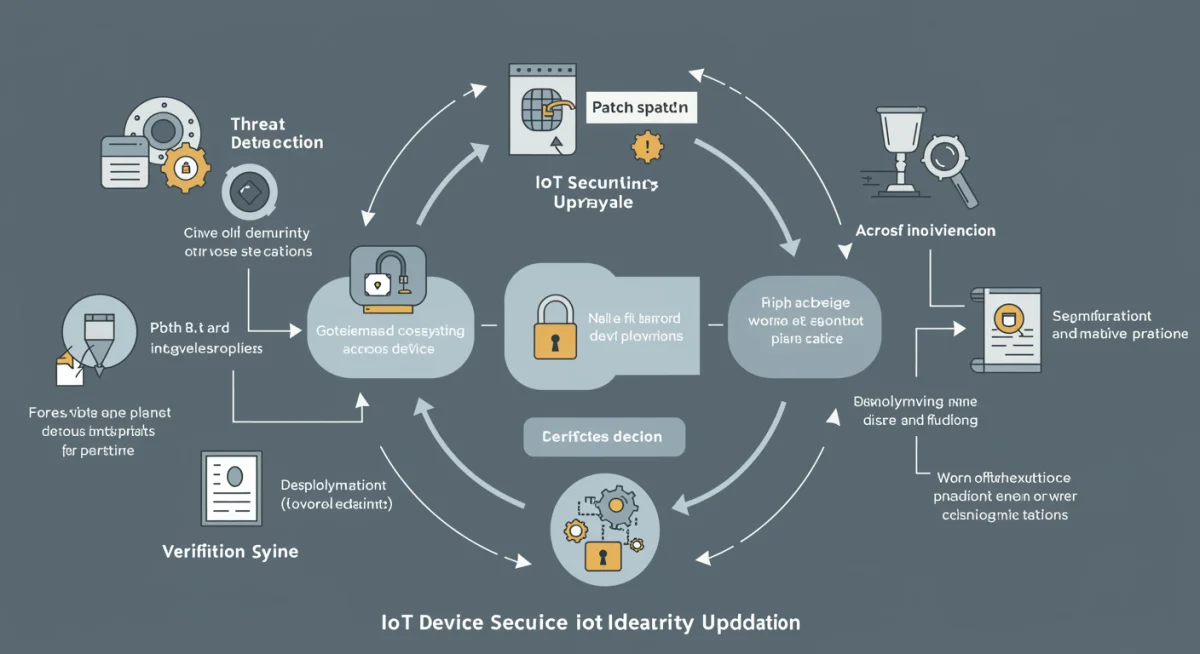
Beyond simple password protection, access controls should be implemented based on the principle of least privilege. This means devices and users should only have access to the resources and functionalities absolutely necessary for their operation. This minimizes the potential damage if an account or device is compromised.
Multi-Factor Authentication (MFA) for IoT
MFA adds an essential layer of security by requiring users to provide two or more verification factors to gain access. For IoT, this could involve a combination of passwords, biometric data, or physical tokens. While sometimes challenging to implement on resource-constrained devices, its benefits in preventing unauthorized access are significant.
- Biometric Authentication: Fingerprint or facial recognition for device access.
- Certificate-Based Authentication: Using digital certificates for device identity verification.
- Hardware Security Modules (HSMs): Protecting cryptographic keys and identities.
Establishing strong authentication and strict access controls is fundamental to building a secure IoT ecosystem. It acts as a barrier against initial breaches and limits lateral movement within a compromised network, making it a critical component of any comprehensive security strategy for 2026.
Network Segmentation and Anomaly Detection
As IoT networks grow in complexity, the traditional flat network architecture becomes a significant security liability. Network segmentation is a crucial best practice for isolating IoT devices from critical enterprise systems and from each other, thereby limiting the blast radius of any potential breach. Anomaly detection further enhances this by identifying unusual behavior indicative of a compromise.
By segmenting networks, organizations can create secure zones for different types of IoT devices, applying specific security policies to each. For instance, industrial control systems could be isolated from consumer-grade smart devices, preventing a breach in one area from impacting another. This layered approach significantly improves overall resilience.
Implementing Zero Trust Principles
The Zero Trust security model, which operates on the principle of “never trust, always verify,” is particularly relevant for IoT. It mandates strict identity verification for every device and user attempting to access resources, regardless of their location within the network. This approach assumes no implicit trust and continuously monitors for suspicious activity.
- Micro-segmentation: Isolating individual devices or small groups.
- Behavioral Analytics: Profiling normal device behavior to detect deviations.
- Real-time Threat Intelligence: Integrating up-to-the-minute threat data into security systems.
Network segmentation, combined with advanced anomaly detection and a Zero Trust philosophy, provides a robust framework for managing the inherent risks of interconnected IoT environments. These practices are essential for preventing the lateral spread of attacks and quickly identifying compromised devices, safeguarding the integrity of the entire system.
Secure Device Provisioning and Lifecycle Management
The security of an IoT device begins long before it is deployed. Secure device provisioning and comprehensive lifecycle management are foundational best practices that ensure devices are secure from inception to retirement. This holistic approach addresses security at every stage, preventing vulnerabilities from being introduced or lingering over time.
Secure provisioning involves securely configuring devices before they connect to the network, including injecting unique identities, cryptographic keys, and initial security policies. This ensures that only trusted devices can join the network and that their communication is protected from the outset. Improper provisioning can leave devices open to immediate exploitation.
End-of-Life Planning for IoT Devices
A often-overlooked aspect of lifecycle management is the secure decommissioning of devices. When an IoT device reaches its end-of-life, it must be securely wiped of sensitive data and disconnected from the network to prevent it from becoming a zombie device or a source of data leakage. Without proper disposal, old devices can pose new risks.
- Secure Boot and Hardware Root of Trust: Ensuring device integrity from startup.
- Tamper Detection: Mechanisms to identify physical tampering with devices.
- Data Encryption at Rest and in Transit: Protecting sensitive information at all times.
By prioritizing secure provisioning and establishing a clear lifecycle management strategy, organizations can embed security into the very fabric of their IoT deployments. This proactive stance, from manufacturing to eventual disposal, is crucial for mitigating risks and building a trustworthy IoT ecosystem for 2026 and beyond.
Collaboration and Regulatory Compliance for IoT Security
Achieving robust IoT security by 2026 will not be solely a technical endeavor; it will require significant collaboration across various stakeholders and strict adherence to evolving regulatory frameworks. Manufacturers, developers, service providers, and end-users all play a vital role in creating a more secure IoT landscape.
Governments and industry bodies are increasingly recognizing the critical importance of IoT security. New regulations and standards are being developed to mandate baseline security requirements for devices, pushing manufacturers to integrate security by design rather than as an afterthought. Staying compliant with these evolving laws is paramount.
Industry Standards and Best Practices
Adopting industry-recognized security standards and best practices provides a common framework for securing IoT devices. Organizations like NIST, ETSI, and OWASP offer guidelines that help in developing, deploying, and managing secure IoT systems. These standards promote interoperability and elevate the overall security posture across the ecosystem.
- NIST Cybersecurity Framework: A comprehensive guide for managing cyber risk.
- ETSI EN 303 645: Baseline security requirements for consumer IoT devices.
- OWASP IoT Top 10: Identifies the most critical security risks in IoT.
Effective IoT security in 2026 hinges on a collective commitment to security, driven by collaboration, regulatory compliance, and the widespread adoption of industry best practices. This concerted effort is essential to build trust in IoT technologies and unlock their full potential while mitigating significant cyber risks.
| Key Security Area | Brief Description |
|---|---|
| Firmware Updates | Regular, automated patches to fix vulnerabilities and enhance device security. |
| Authentication | Strong, unique credentials and Multi-Factor Authentication (MFA) for device access. |
| Network Segmentation | Isolating IoT devices to limit spread of breaches and apply specific policies. |
| Secure Provisioning | Ensuring devices are securely configured with unique identities from inception. |
Frequently Asked Questions About IoT Security in 2026
Firmware updates are vital because they address newly discovered vulnerabilities and improve device functionality. Without regular updates, IoT devices remain exposed to evolving cyber threats, making them easy targets for attackers. Timely patching is a fundamental defense mechanism against exploitation.
MFA for IoT involves requiring more than one verification method, such as a password combined with a biometric scan or a one-time code from a connected app, before granting access. This significantly enhances security by making it much harder for unauthorized users to gain control, even if they obtain a password.
Network segmentation involves dividing a network into smaller, isolated sub-networks. For IoT, this separates devices from critical IT infrastructure and from each other. If one segment is compromised, the breach is contained, preventing it from spreading across the entire network and minimizing potential damage.
Zero Trust assumes no user or device can be automatically trusted, regardless of their location. Every access request is verified. For IoT, this means strict identity checks and continuous monitoring for each device and connection, ensuring that only authenticated and authorized entities can interact with the network, greatly reducing risk.
Regulations and industry standards establish baseline security requirements, compelling manufacturers to integrate security by design. Compliance ensures devices meet a minimum security threshold, fostering greater trust and interoperability within the IoT ecosystem. This collective effort is crucial for elevating overall security.
Conclusion
The journey towards securing IoT devices by 2026 is multifaceted, requiring a strategic blend of technological advancements, procedural best practices, and collaborative efforts. From the imperative of regular firmware updates and robust authentication to the strategic implementation of network segmentation and secure lifecycle management, each component plays a critical role. As the IoT landscape continues to expand and evolve, proactive engagement with these security principles, alongside adherence to emerging regulations and industry standards, will be paramount. By embracing these comprehensive strategies, we can significantly reduce common vulnerabilities, fostering a more secure and trustworthy future for our interconnected world.