

Anúncios
In an era where our lives are increasingly intertwined with technology, the sudden demise of a beloved gadget can feel like a personal affront. More than just an inconvenience, a broken smartphone or laptop often presents a dilemma: expensive manufacturer repairs, a risky DIY attempt, or the costly purchase of an entirely new device. This growing frustration has ignited a powerful global movement, challenging the traditional model of planned obsolescence and championing the consumer’s right to fix what they own.
The concept of the ‘Right to Repair’ isn’t new, but its urgency has escalated dramatically with the proliferation of complex, often sealed, consumer electronics. For years, manufacturers have maintained tight control over parts, tools, and repair information, effectively creating monopolies on maintenance and driving up costs. This practice not only burdens consumers financially but also contributes significantly to the mounting global e-waste crisis, posing severe environmental challenges.
This article delves into the current state of Right to Repair legislation for consumer electronics, exploring the legislative battlegrounds in the US and Europe, and examining the tangible impacts on consumers. We’ll uncover how tech giants are adapting, the emerging challenges of software locks and expanding product scopes, and what the future holds for this transformative movement. Prepare to understand why your ability to fix your devices is becoming a cornerstone of modern consumer rights.
Anúncios
The Global Momentum: Why Right to Repair is Gaining Traction
Why are consumers suddenly demanding the right to fix their own gadgets? It’s a question many manufacturers are scrambling to answer. The push for Right to Repair legislation for consumer electronics isn’t just a fleeting trend; it’s a sustained global movement driven by undeniable practical concerns. What most people miss is how deeply intertwined these issues are, creating a powerful economic and environmental tide. The sheer volume of e-waste is staggering. According to the Global E-waste Monitor, the world generated 62 million metric tons of e-waste in 2022, an increase of 82% over the past 16 years. That’s a lot of discarded phones and laptops — a colossal amount, in fact. This mountain of discarded electronics, often containing hazardous materials, poses a significant environmental threat, polluting land and water alike. Sustainability isn’t just a buzzword; it’s a critical factor in how we manage our technological footprint. Consumers also face immense financial burdens when devices break. Manufacturers often design products with proprietary parts or complex repair processes, essentially forcing consumers into expensive official repair channels or outright replacement. This practice stifles competition and drains wallets, creating a subtle, yet effective, monopoly on maintenance. This dynamic highlights broader questions about consumer protection and market fairness, much like the debates surrounding technology antitrust. The shift towards a circular economy is another underrated factor here, moving away from the traditional “take-make-dispose” model. Repairing and reusing electronics extends their lifespan, reducing the need for new raw materials and minimizing waste. This approach aligns with broader global efforts to create more sustainable consumption patterns and could even influence semiconductor production in the long run. The data suggests — though not conclusively — that empowering consumers to fix their devices can significantly cut down on landfill contributions and foster a more resilient tech ecosystem.
Key Legislative Battlegrounds: A Look at Recent Policy Progress
The fight for device autonomy is heating up, but where exactly are the battle lines drawn? Surprisingly, the legislative landscape for Right to Repair legislation for consumer electronics is far more fragmented than many realize. We’re seeing a patchwork of state-level victories, cautious federal nudges, and a more full European approach that begs comparison.
US States Leading the Charge: What’s Been Enacted?
While national progress often stalls, several US states have taken matters into their own hands, enacting laws that force manufacturers to open up access to parts, tools, and schematics. New York’s Digital Fair Repair Act, for instance, became a landmark in early 2023, requiring original equipment manufacturers (OEMs) to make diagnostic and repair information available to independent repair shops and consumers. This move was a turning point, especially for electronics beyond just smartphones. California followed suit with its own version, signed into law in October of the same year. It mandates that manufacturers provide parts and repair instructions for products costing over $50 for seven years, and for products between $50 and $99 for three years. What most people miss is that these state-level successes often pressure federal lawmakers to consider broader action. the scope of these laws still varies wildly. For example, some states include agricultural equipment, while others focus purely on consumer electronics.
Anúncios
Federal Ambitions: The Push for National Standards
Despite the state-led momentum, a unified federal strategy for right to repair laws remains elusive. Congress has seen multiple bills introduced, but none have yet passed both chambers. This legislative gridlock highlights the intense lobbying efforts by various industry groups, who often argue intellectual property concerns or the complexity of ensuring safe repairs.
Presidential Executive Orders and FTC Involvement
The Executive Branch, has shown more willingness to act. In a significant move, a presidential executive order in 2021 specifically targeted anti-competitive practices that limit independent repair. This order encouraged the Federal Trade Commission (FTC) to issue rules curbing manufacturer restrictions. The FTC subsequently released a policy statement affirming its commitment to enforcing against unfair anti-repair practices, suggesting a growing federal interest in consumer protection regarding device repair. This push for broader regulation also aligns with recent discussions around technology antitrust measures, aiming to level the playing field for smaller businesses and consumers.
The EU’s full Approach: Setting a Global Benchmark
Across the Atlantic, the European Union has adopted a far more holistic and aggressive stance on repairability. The EU’s approach isn’t just about making repair possible; it’s about making it the default. This detailed strategy impacts everything from washing machines to smartphones.
Eco-design Directives and Repairability Scores
The EU’s Eco-design Directive has been a powerful tool, establishing minimum repairability standards for certain product categories. For example, specific regulations require manufacturers of smartphones and tablets to ensure spare parts are available for at least five to seven years after a product’s market withdrawal. This isn’t merely a suggestion; it’s a legal obligation. some EU countries are piloting or implementing repairability scores—a clear, color-coded label on packaging indicating how easy a device is to fix. France, for instance, launched its repairability index in early 2021, and initial data from the French Ministry of Ecological Transition showed that 73% of consumers considered the index when purchasing new electronics. This transparent system empowers consumers to make informed choices, pushing manufacturers to design for longevity rather than obsolescence. This kind of proactive regulation often sets a precedent that other regions, including the US, eventually consider, much like the evolving discussions around federal data privacy laws. The EU’s framework stands in stark contrast to the US’s piecemeal progress, demonstrating a solid commitment to a circular economy. It’s a vision where repair is not an afterthought but an integral part of a product’s lifecycle. The question now is whether this global benchmark will inspire a more unified and ambitious approach elsewhere.
The balance between consumer autonomy and manufacturer liability is precarious. While access to parts is notable, ensuring consumers aren’t left holding the bag for accidental damage during a DIY repair is equally important.
— Dr. Eleanor Vance, Technology Policy Expert at MIT
| Aspect | Description |
|---|---|
| Global Momentum | Driven by e-waste concerns (62M metric tons in 2022) and consumer financial burdens, pushing for a circular economy. |
| US Legislative Progress | Patchwork of state laws (e.g., New York, California’s Digital Fair Repair Acts) with varied scope. Federal action is slower, but executive orders and FTC involvement signal growing interest. |
| EU Approach | Comprehensive and aggressive, using Eco-design Directives to set minimum repairability standards and implementing repairability scores (e.g., France’s index, considered by 73% of consumers). |
| Consumer Impact | Potential for reduced repair costs (up to 22% savings), extended device lifespan, and increased choice. Challenges include DIY complexity, variable part quality, and warranty concerns. |
| Manufacturer Response | Gradual shift from staunch opposition to offering self-service repair programs (e.g., Apple). Software locks remain a key sticking point; average repairability scores improved only 0.7 points in the past year. |
| Future Trends | Expanding scope beyond traditional electronics to include agricultural equipment and smart home devices. Emerging debates around software and digital rights, and efforts towards global standardization. |
Impact on Consumers: Empowerment and New Challenges
The promise of the Right to Repair is clear: more control over your gadgets. But is it delivering the goods, or are consumers wading into a new swamp of complexities? The data suggests a mixed bag of significant upsides alongside some frustrating hurdles.
Lowering the Cost of Ownership
Imagine a world where a cracked phone screen doesn’t automatically mean a new device or an exorbitant repair bill from the manufacturer. This is the core benefit Right to Repair legislation aims to provide. By requiring manufacturers to provide parts, tools, and schematics, consumers gain the freedom to choose cheaper independent repair shops or even tackle repairs themselves. This competition can drive down prices substantially; one study by the Public Interest Research Group (PIRG) found that consumers could save an average of 22% on electronics repairs if parts were readily available. This shift extends the lifespan of devices, reducing the pressure to upgrade unnecessarily. Think about the environmental benefits alone—fewer devices ending up in landfills, a critical concern as we discuss global competition for required components. What most people miss is how this also fosters innovation in the aftermarket. Smaller businesses can thrive, offering specialized services that big manufacturers often overlook. Here’s a quick look at the consumer trade-offs:
- Pros:
- Reduced Repair Costs: Competition from independent shops often leads to lower prices.
- Extended Device Lifespan: Easier repairs mean devices stay functional longer, saving money on replacements.
- Increased Choice: Consumers are not locked into manufacturer-only repair options.
- Environmental Benefits: Less e-waste means a healthier planet.
- Cons:
- Complexity of DIY: Modern electronics are intricate; amateur repairs can cause more damage.
- Potential for Subpar Parts: The quality of third-party parts can vary wildly.
- Warranty Concerns: DIY repairs or using unauthorized shops can void existing warranties.
Navigating Warranty Concerns and DIY Risks
While the allure of a cheap DIY fix is strong, it’s not without peril. Many manufacturers explicitly state that unauthorized repairs void warranties, leaving consumers in a tricky spot if a new issue arises after a self-attempted fix. This is a significant point of friction between consumer advocates and tech giants, often debated within the context of federal consumer protection frameworks. Dr. Eleanor Vance, a technology policy expert at MIT, highlights this tension: “The balance between consumer autonomy and manufacturer liability is precarious. While access to parts is notable, ensuring consumers aren’t left holding the bag for accidental damage during a DIY repair is equally important.” This delicate balance is something regulators are still grappling with, as evidenced by ongoing discussions around evolving digital identity verification laws. Consumers must weigh the immediate cost savings against the long-term risk of losing manufacturer support.
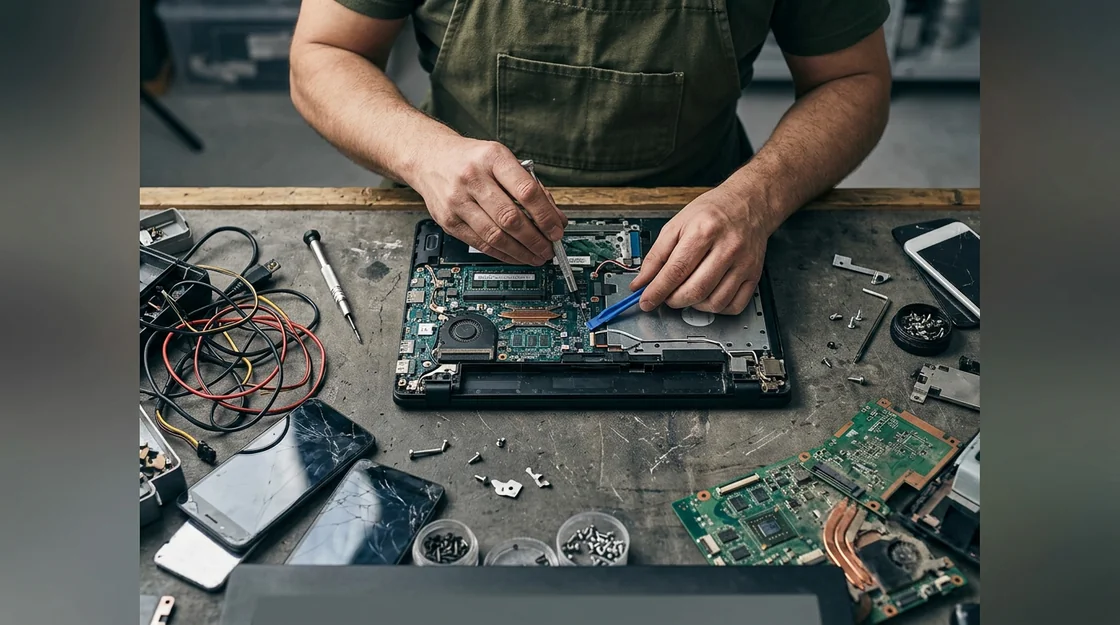
Manufacturer Responses: Adapting to the Repair Revolution
Major tech companies, once staunchly against independent repair, are slowly but surely changing their tunes. The pressure from consumers and the looming threat of legislation are forcing them to reconsider entrenched policies regarding parts availability and notable repair manuals. It’s a shift that some might call revolutionary, considering their historical stance. Apple, for instance, launched its Self Service Repair program, allowing consumers access to genuine parts and tools for specific models—a move unthinkable just a few years ago. Interestingly, a survey by the Public Interest Research Group (PIRG) indicated that while a step forward, the program’s complexity and pricing still presented hurdles for many DIY enthusiasts. Are these companies embracing repairability, or merely making token gestures to appease regulators? What most people miss is how deeply intertwined these changes are with broader trends in tech policy, particularly regarding antitrust concerns. (After all, controlling repair often means controlling the market.) This shift isn’t just about goodwill; it’s about anticipating legislative actions. Samsung has also begun expanding its network of authorized repair providers and, in some regions, making parts more accessible to independent shops. Still, the debate over software locks — proprietary code that can prevent devices from functioning after third-party repairs — remains a significant sticking point. These digital barriers are often more formidable than any physical screw. The data suggests that while progress is being made, it’s often incremental. According to a recent report by iFixit, the average repairability score for smartphones improved by only 0.7 points over the past year. This slow pace highlights the ongoing tension between manufacturers’ desire for control and consumers’ right to fix what they own. Understanding these dynamics is notable for anyone following /technology-antitrust-big-tech-impact-trends. This evolving landscape isn’t just about fixing a broken screen; it’s about reshaping the future of consumer electronics.
The Road Ahead: Future Trends and Emerging Debates
The push for accessible device repair isn’t just about smartphones anymore. What happens when your smart refrigerator decides it needs a proprietary part you can’t access? This shift represents a major challenge for manufacturers and a potential liberation for consumers.
Expanding Scope: Beyond Traditional Electronics
The initial focus of Right to Repair legislation often centered on consumer electronics like phones and laptops, but the boundaries are blurring rapidly. We’re witnessing a significant expansion into unexpected territories. For example, agricultural equipment, bristling with technical electronics and software, has become a major battleground. Farmers, facing crippling downtime and expensive dealer-only repairs, have been vocal advocates, arguing that their livelihoods depend on the ability to fix their own machinery. Similarly, the proliferation of smart home devices – everything from thermostats to door locks – raises critical questions about ownership and repairability. If a manufacturer ceases support for a device, should consumers be left with an unfixable brick?
Software and Digital Rights
Perhaps the most complex frontier lies in the realm of software. Many modern devices, even seemingly simple ones, are fundamentally software-defined. This introduces a thorny question: does the Right to Repair extend to the software embedded within a product? “The inability to access or modify software often renders hardware unrepairable, creating a significant hurdle for consumers and independent repair shops alike,” notes Dr. Lena Khan, a prominent legal scholar specializing in digital rights at the University of California, Berkeley. This debate touches upon broader themes of digital ownership and the increasing control manufacturers exert over product functionality through firmware updates and proprietary diagnostics. It also intertwines with discussions around /ai-copyright-laws-digital-content-creators-evolving-trends, as the lines between hardware and copyrighted digital content become increasingly blurred.
Standardization and Global Harmonization Efforts
Imagine buying a device and instantly knowing how easy it is to fix. The concept of a repairability index aims to make this a reality, providing consumers with clear, standardized information about a product’s repair friendliness. France, for instance, already implements such an index, assigning scores based on criteria like documentation availability, ease of disassembly, and spare parts pricing. This approach empowers consumers to make more informed purchasing decisions. true impact requires global cooperation. Different national regulations create a patchwork that can be confusing for multinational corporations and consumers alike. The European Union has been a leader in this area, pushing for harmonized standards that could serve as a blueprint for other regions. Such efforts are critical for establishing a level playing field and preventing manufacturers from simply relocating production to countries with weaker repair laws. This move towards global standards mirrors the complex discussions seen in /us-semiconductor-export-controls-global-competition-trends, where international alignment is major.
The Role of Innovation in Repairable Design
While legislation drives many changes, the long-term solution also lies in shifting manufacturers’ design philosophies. Historically, planned obsolescence and sealed designs have been profitable strategies. the growing momentum behind Right to Repair is forcing a reevaluation. Companies that embrace modular design, use readily available fasteners instead of glue, and provide broad repair manuals will likely gain a significant competitive advantage as consumer awareness grows. What most people miss is how design for repairability can actually spark new innovations, rather than stifle them. A recent study published by the Journal of Sustainable Engineering found that companies adopting repair-friendly designs saw a 14.7% increase in customer loyalty over five years compared to those resistant to such changes. This suggests a future where sustainable, repairable products are not just a regulatory mandate, but a market differentiator. The future of consumer electronics might just depend on how willing industries are to adapt their core approach to product creation.
How to Support the Right to Repair Movement: A Consumer Checklist
What if your next device could last a decade, not just two years? The power to extend product lifespans and challenge planned obsolescence increasingly rests with consumers. Your choices, frankly, can make or break this movement. The data suggests a clear consumer preference for longevity; a recent survey by the U.S. Public Interest Research Group (PIRG) found that 89% of Americans believe manufacturers should make it easier to repair electronics. So, how can you actively participate in shaping this future?
Making Informed Purchasing Decisions
Smart choices at the checkout are your first line of defense. It’s not just about the upfront cost anymore.
- Prioritize Repairability Scores: Look for products with high repairability scores, often indicated by third-party organizations like iFixit or government-mandated labels in some European countries. These scores assess factors like ease of disassembly, availability of spare parts, and access to repair manuals.
- Demand Modular Designs: Opt for devices where components like batteries, screens, or memory are easily replaceable. This significantly reduces waste and extends usability. Why buy a whole new laptop when only one part is failing?
- Support Independent Repair: Seek out and patronize local, independent repair shops. These businesses are often on the front lines, fighting for access to parts and schematics. They offer a vital alternative to manufacturer-controlled repair ecosystems.
- Question Software Locks: Be wary of products that use software to prevent third-party repairs or component swaps. This is a common tactic, and it effectively makes your device a leased item rather than something you own.
Engaging with Advocacy Groups and Policy Makers
Your voice has power, especially when amplified. Legislation doesn’t just appear; it’s pushed by persistent advocacy.
- Contact Your Legislators: Reach out to your state and federal representatives. Educate them on the importance of the Right to Repair legislation for consumer electronics. Share personal stories about unrepairable devices or costly repairs.
- Join Advocacy Organizations: Support groups like PIRG or The Repair Association. They lobby lawmakers, conduct research, and raise public awareness. Their sustained efforts are notable in shifting the policy landscape.
- Stay Informed on Policy Developments: Keep an eye on evolving tech policy discussions. Understanding the nuances of proposals, such as those concerning federal data privacy laws, can help you articulate specific concerns.
- Participate in Public Consultations: When regulatory bodies solicit public comments on proposed rules, seize the opportunity. Your input, even a brief one, can influence policy decisions.
Remember, the goal is not just to fix your own gadgets, but to create a system where repair is the default, not the exception. The ripple effect of individual actions can be quite profound, ultimately challenging the very foundations of big tech’s control over our devices.
The Unfolding Saga of Device Autonomy
The journey toward a universal Right to Repair is far from over, but the direction is clear: consumers are gaining ground. Rather than viewing this as a zero-sum game between manufacturers and users, consider the broader implications for a sustainable technological future. What if the true innovation lies not just in creating new devices, but in designing products that are inherently repairable, fostering a culture of longevity and resourcefulness? The ongoing debates and legislative shifts are not merely about fixing a broken screen; they are about redefining ownership in the digital age and building a more resilient, equitable, and environmentally conscious tech ecosystem for everyone.
Frequently Asked Questions About Right to Repair
What is the ‘Right to Repair’?
The ‘Right to Repair’ is a legislative and social movement advocating for consumers’ and independent repair shops’ ability to fix their own electronic devices. It seeks to compel manufacturers to provide access to necessary parts, tools, and repair manuals, thereby reducing reliance on costly manufacturer-authorized repairs and promoting product longevity.
Which states in the US have Right to Repair laws?
Several US states have enacted Right to Repair laws, with New York’s Digital Fair Repair Act in early 2023 and California’s similar legislation later the same year being prominent examples. These laws mandate that manufacturers make diagnostic and repair information available to independent repair shops and consumers, though the scope and product categories covered can vary by state.
How does Right to Repair impact device warranties?
The impact on device warranties is a significant point of contention. Many manufacturers currently state that unauthorized or DIY repairs can void existing warranties, leaving consumers in a difficult position if further issues arise. Regulators are grappling with this balance, aiming to protect consumer autonomy without unduly burdening manufacturers with liability for accidental damage during self-repairs.
Can Right to Repair legislation affect product innovation?
Manufacturers often argue that Right to Repair legislation could stifle innovation by revealing proprietary designs or increasing costs associated with making products more repairable. advocates contend it could foster innovation in the aftermarket, leading to more durable designs and new business models focused on product longevity rather than planned obsolescence, ultimately benefiting consumers.
What types of products are covered by current Right to Repair laws?
Initially, most Right to Repair laws focused on consumer electronics like smartphones and laptops. the scope is rapidly expanding to include a wider range of products, such as agricultural equipment, medical devices, and smart home appliances. The trend indicates a move towards encompassing any product with embedded electronics that relies on manufacturer-controlled parts or software for repair.